The short version
For bathroom water damage in Houston, start by closing the fixture valve. Then blot up standing water, empty the wet cabinets and take photos. A plumber fixes the source while a restoration provider handles drying of cabinets, floors and walls. The EPA advises drying wet materials in 24 to 48 hours.
What should I do first after a bathroom or kitchen leak in Houston?
Shut the water off at the fixture, then turn to drying whatever got wet. Bathroom and kitchen leaks move into cabinets, walls and flooring faster than they show, so the early steps are about keeping the water from going any farther.
- Close the fixture valve. The small oval or round valve under a sink or behind a toilet shuts off that fixture only. If it will not turn, close the house shutoff. The burst pipe page shows where to look.
- Cut power to the wet area at the breaker, but only if the panel is reachable without stepping in water.
- Empty the vanity or cabinet. Wet items out, so air can reach the cabinet floor.
- Take photos of the source and the damage before you clean.
- Blot standing water with towels or a wet vacuum, then set a fan on the spot.
- Line up two kinds of help: one for the repair (a plumber) and one for the drying (a restoration provider).
Providers differ in what they handle, so confirm directly whether they dry cabinets and open floors or leave the rebuild to a contractor. If you need the wider picture first, the water damage repair page explains how drying and rebuilding fit together.
Which bathroom or kitchen fixture is leaking, and who fixes it?
Each fixture fails in its own way, and the repair itself is normally a plumber's job. The table lists the usual suspects and what each one looks like. A restoration provider comes in after the leak is stopped to dry the damage.
| Fixture | What you may notice | What to shut off | Who fixes it |
|---|---|---|---|
| Shower pan or base | Soft floor outside the shower, loose tile, a stain on the ceiling below | Stop using the shower | Plumber or tile contractor |
| Tub overflow | Water on the floor as the tub fills | Close the tap, drain the tub | Plumber |
| Toilet seal or supply | Damp floor at the base, a toilet that rocks | Shutoff behind the bowl | Plumber |
| Sink supply line | A damp cabinet base, or beads of water at the valve | Stop under the sink | Plumber |
| P-trap or drain | Drips only while the sink drains | Stop using the sink | Plumber |
| Faucet | Water pooling at the base or handle | Valves under the sink | Plumber |
| Garbage disposal | Drip from the housing, odor under the sink | Stop using it | Plumber or installer |
Dishwashers, refrigerator lines and washers sit on a separate page, appliance leak water damage. Water heaters have their own too, at water heater leaks.
How do I know a shower leak is causing hidden damage?
Check beside and below the shower, not inside it. A leaking pan or wall seldom shows in the stall itself. The warning signs are a spongy floor just outside the enclosure, hollow-sounding tile, grout that cracks again after repair, and a stain in the room or ceiling beneath.
To test a shower pan, a plumber plugs the drain and watches whether the water level drops. A moisture meter held to the adjacent wall shows how far the water has traveled. Walls beside a tub or shower often need the same dry-or-remove decision as any wet wall, which is covered in drywall water damage repair.
Houston bathrooms are often tiled, and tile hides trouble well. If a spot near the shower stays damp or smells musty with no visible source, ask for a meter reading before anyone re-grouts.
Can water damaged cabinets be saved?
Solid wood often dries out and recovers, while particleboard usually does not. Water-damaged kitchen cabinets tend to show swelling on the bottom edge, bubbling veneer, a soft cabinet floor and a musty smell, and the material decides most of the outcome.
Particleboard and MDF absorb water, puff up and lose strength. Drying does not shrink them back. A door with a swollen edge is a cosmetic problem, but a swollen floor under a sink is structural.
A provider may pull the toe kick and drill small access holes so air reaches the space behind and beneath the box. Ask whether the cabinets can stay before agreeing to replace them, and photograph the damage first because an adjuster will want to see it. Countertops are a related question: stone and laminate tops usually survive, but a particleboard core under laminate can swell at the seams.
What happens to the subfloor under a tub, vanity or sink?
The subfloor holds water longer than the finished floor does. Wet wood under a tub, vanity or kitchen sink can stay damp for a long time while nothing shows above it. How you reach it depends on how the house is built.
In a slab-on-grade house, the floor under the cabinet is concrete topped with tile, vinyl or wood. Concrete does not rot, but it holds moisture and can keep flooring damp from below. Upstairs, the floor is wood framing. Water there can drop through to the ceiling below, and the framing can soften if it stays wet.
Signs include a floor that dips, flooring that lifts at the edges, a returning stain and a damp smell. A provider measures with a moisture meter and opens the cabinet or floor if needed. For flooring choices, see water damaged floor repair.
Can tile and grout hide a leak?
Yes. Cracked grout and open tile joints let water through, and it collects underneath while the surface looks normal. Tile itself does not soak up water, but the backer board, mortar bed and wood below do, and they dry slowly.
- Cracked or missing grout lets water in at the joints.
- Hollow or loose tile suggests the bond below has failed.
- Dark lines in the grout that return after cleaning can mean moisture from beneath.
- A soft spot beside the tub points to a wet floor structure.
Re-grouting touches only the surface and does not fix a leak. When water is reaching the space behind the tile, someone has to open the wall or floor and dry it before anything is sealed again.
What do I do about a toilet overflow?
Close the valve behind the bowl to stop the flow, and hold the flapper down inside the tank if it keeps running. Then judge the water. The IICRC S500 standard puts a toilet overflow without waste in Category 2, and one carrying waste is more serious.
Category 2 water is treated with more care than clean water. Wear gloves, keep children and pets out, and do not carpet-dry it yourself if it soaked in. If the water came up from a floor drain or the lowest fixture rather than the bowl, it may be a sewer backup, covered in sewage backup cleanup.
A bathroom on an upper floor deserves extra attention. Overflow water finds gaps around the toilet flange and the tub drain, then shows up as a stain in the ceiling below.
Why is there a stain on the ceiling below the bathroom?
The water traveled down. In a two-story house, a leak from an upstairs shower, tub or toilet drips through the floor and shows up in the ceiling below, often well away from where it began. Do not poke a bulging ceiling without a plan for the water.
The ceiling water damage guide explains how to release a bulge safely. Point out the upstairs fixture to the provider, because where the water came from matters as much as where the stain appears. Attic equipment can cause the same kind of stain, so rule out an air handler drain line or a water heater if the bathroom looks dry.
What category of water is a bathroom or kitchen leak?
The source decides. Under IICRC S500, Category 1 is clean water, for example water from a burst pipe or a supply line. Category 2 is grey water, such as from a washer, a dishwasher or a toilet overflow without waste. Category 3 is grossly contaminated water, such as sewage or rising flood water.
A cracked supply line begins as Category 1, while a drain leak is never clean. Water that sits in a cabinet or floor for a long time also gets handled with more caution than a fresh spill, even if it started clean.
Flood water from outside the house is Category 3, and FEMA says most homeowners insurance does not cover flooding. Fixture leaks are a different question from storm water, which is why the source matters for both the drying plan and the claim.
Does insurance cover bathroom and kitchen water damage?
Sudden leaks are frequently covered, and slow ones frequently are not. According to NAIC, damage from water that comes out of a home's plumbing is typically covered, but groundwater and runoff from rain are not. Triple-I says standard forms name water that escapes or overflows by accident from plumbing or a household appliance as a covered peril.
Sudden versus gradual is the dividing line. Triple-I says policies exclude damage from poor upkeep, mold or pests. A line that suddenly fails and soaks a vanity makes for a very different claim than a drip that went unnoticed for months.
Triple-I advises contacting your agent or insurer right away, protecting the property from more damage, and holding off on major permanent repairs until the adjuster has looked. Save receipts and photograph everything.
The Texas Department of Insurance explains its claim deadlines in steps, which the insurance claims guide walks through. Many policies list the plumbing fix and the damage it caused as separate lines, so read yours.
Can mold grow under sinks and behind showers?
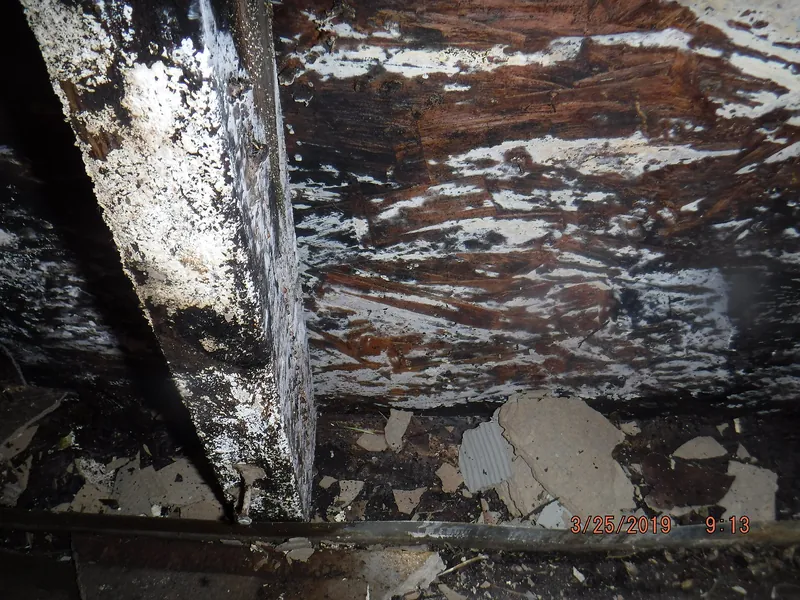
Yes. Spaces under sinks and behind shower walls stay damp and get little airflow. To prevent mold growth, the EPA says water-damaged areas and items should be dried in 24 to 48 hours, a window that is easy to miss when the leak is out of sight.
A musty smell, dark spots on a cabinet floor, and peeling paint near a shower are common signs. A space that is slow to dry stays at risk longer. The EPA puts the target for indoor humidity under 60 percent, ideally 30 to 50 percent.
The EPA adds that a patch of mold covering less than roughly 10 square feet is usually something you can clean yourself, and that painting or caulking over mold is a mistake. Anything larger, or any area with contaminated water, calls for a professional.
The CDC lists coughing, a stuffy nose and burning eyes as symptoms, with stronger reactions for people with asthma. See mold after water damage for more.
What do bathroom and kitchen repairs cost?
Cost follows the fixture, the materials and the reach of the water. Bob Vila's national figures run $1.50 to $3 per square foot for drywall repair and $350 to $1,250 for ceiling repair, and Fixr gives the same $1.50 to $3 per square foot for drywall.
These are national averages, they leave out cabinets, tile and plumbing, and a Houston quote can differ. No provider can price a room without measuring and testing it, and providers set their own rates, so confirm directly. The water damage restoration cost page has the wider breakdown.
Sources: IICRC S500; NAIC, Homeowners Insurance; Triple-I, Which disasters are covered by homeowners insurance?; Triple-I, Settling insurance claims after a disaster; FEMA, Don't have flood insurance; Texas Department of Insurance, Getting your insurance claim paid; EPA, A Brief Guide to Mold, Moisture and Your Home; EPA, Mold Cleanup in Your Home; CDC, About Mold and Your Health; Bob Vila, How Much Does Water Damage Restoration Cost?; Fixr, Water Damage Restoration Cost