For Woodlands homeowners
For water damage restoration in The Woodlands, TX, shut off the main valve, photograph everything and start drying in the first 24 to 48 hours. Creek and street water is flood water and is not covered by standard homeowners policies. We take requests from Spring and Conroe ZIPs across The Woodlands.
Which Woodlands addresses do you take requests from?
Requests for water damage restoration in The Woodlands, TX come from Spring 77380, 77381, 77382 and 77386, and from Conroe 77384 and 77385. PO boxes in Spring 77387 and 77393 are also included. A restoration provider confirms they can reach your street when they call.
The mailing city can mislead. Most of The Woodlands is in Montgomery County, with a small part in Harris County, and its ZIPs say Spring or Conroe. Wikipedia counts 114,436 residents at the 2020 Census, in a community that is a special-purpose district, not a city.
Neighbors have their own pages: Spring and Klein to the south, Tomball to the west, Conroe and Willis to the north, and New Caney and Porter to the east.
Does The Woodlands, TX flood?
Wikipedia's article does not document a flood history for The Woodlands, so this page will not invent one. It does say the terrain is essentially flat, with elevations between 125 and 175 feet above sea level from Spring Creek to Flintridge Drive. Flat ground drains slowly when rain is heavy.
The region has seen extreme rain. The National Hurricane Center reports 36 to 48 inches fell in the Houston metro area during Hurricane Harvey. In May 2024 the National Weather Service recorded 14.77 inches at Conroe, the wettest May on record there.
Those totals say the area can get more water than drains can carry. They do not say which Woodlands street is at risk. Check your lot on FEMA's flood map, and read our flood zone guide for how to interpret the zone.
Water that rises from a creek or the street is Category 3 under the IICRC S500 standard. Read flood cleanup before you touch it.

How do the trees and Spring Creek shape water problems here?
The Woodlands sits in a heavily forested area, and Wikipedia says much of the community kept its trees. The original plan used the environmental design ideas of Ian McHarg, author of Design With Nature. Trees shade houses, but they also drop limbs, clog gutters and fall in storms.
Spring Creek is the other feature. Wikipedia says the Akokisa and Bidai peoples relied on its fresh water, and the land around it is now the George Mitchell Nature Preserve, part of the Spring Creek Greenway. The Harris County Flood Control District lists Spring Creek among the waterways in its drainage network.
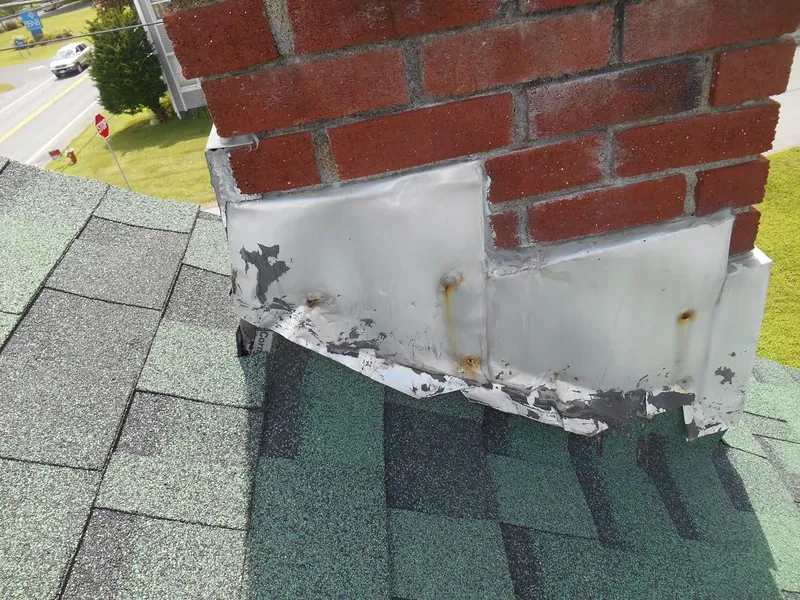
Storm damage often starts at the roof. The National Weather Service says Hurricane Beryl brought down numerous trees and power lines, and five of seven direct deaths in its area came from falling trees. A limb that breaks a shingle line lets water in for days before anyone sees it.
- Clear gutters and valleys after leaf drop and after storms.
- Walk the attic after a hard rain and look for damp decking.
- Photograph roof damage before a tarp goes on.
The roof leak guide explains how to trace a stain to its source, and hurricane water damage covers wind-driven rain.
What kinds of homes does The Woodlands have?
Almost every kind, built over a long stretch. George Mitchell dedicated The Woodlands in 1974, and Wikipedia says houses were meant to range from moderately priced to large and expensive. The 2020 Census counted 45,325 housing units, and 7.1% of them were vacant.
Wikipedia lists eight villages, from Grogan's Mill and Indian Springs to Alden Bridge and Sterling Ridge. A house in an early village and one in a newer village can differ in age by decades, so the weak points differ too.
| Feature | What Wikipedia says | What it means for a wet house |
|---|---|---|
| Eight villages | Alden Bridge, Cochran's Crossing, College Park, Creekside Park, Grogan's Mill, Indian Springs, Panther Creek and Sterling Ridge | Houses range widely in age, so ask yours |
| Forested lots | Heavily forested; much of the community retained trees | Roof and gutter damage from limbs |
| Town Center canal | A central canal modeled on the San Antonio River Walk | Ask a building manager about flood risk and drainage |
| Vacancy | 7.1% of 45,325 housing units vacant in 2020 | Empty homes can leak unnoticed |
Which leaks start inside a Woodlands house?
The usual ones in this part of Texas: an attic air handler, a water heater, supply lines and appliances. Most Houston-area houses sit on concrete slabs, so water spreads across the floor instead of draining below it. Our AC leak guide covers the drain line that overflows into a ceiling.
Ask a plumber to check your water heater and its pan, especially if it stands in the attic or garage. The water heater leak page lists the warning signs.
- Find the main shutoff and turn it off if a line is leaking.
- Turn off power to the wet area if you can do so safely.
- Move rugs, boxes and furniture off the floor.
- Photograph the damage and call your insurer.

A second home or a rental that sits empty can leak for weeks. Turn the water off at the main when you travel, and ask a neighbor to look in after a storm or freeze. The American Red Cross says to leave the heat no lower than 55 F when you are away in cold weather.
What will insurance cover in The Woodlands?
A sudden plumbing leak is usually covered, but flood is not. The Insurance Information Institute says flood damage is excluded under standard homeowners and renters policies and needs a separate policy. The NAIC adds that ground water and rain runoff are typically not covered either.
Mold is another gap. Triple-I notes that standard policies will not cover damage from lack of maintenance or mold, and the NAIC says policies often exclude mold cleanup. Dry everything quickly so the question does not arise.
Call your agent first, and hold off on major permanent repairs until the adjuster has seen the damage, as Triple-I advises. The insurance claims guide explains what to photograph and save.
What should I do in the first 24 to 48 hours?
Stop the water, protect people, then start drying. The EPA says to dry water-damaged areas and items within 24 to 48 hours to prevent mold growth, so the clock matters from the first hour. Keep indoor humidity below 60 percent, ideally between 30 and 50 percent.
- Shut off the main valve and the power to wet areas if that is safe.
- Photograph and video everything before you move it.
- Call your insurer and ask what they need before work starts.
- Call a restoration provider and ask what they will measure.
- Do not paint or caulk over damp surfaces.
The emergency page has a longer checklist, and mold after water damage covers growth that has started. Our guide to choosing a restoration company lists what to ask on the call.
Sources: The Woodlands, Texas and Montgomery County, Texas (Wikipedia, citing the 2020 Census); NHC Hurricane Harvey report; NWS May 2024 climate summary; NWS Hurricane Beryl report; HCFCD watersheds; American Red Cross, frozen pipes; Triple-I, disasters covered by homeowners insurance; Triple-I, settling claims; NAIC homeowners insurance; IICRC S500; EPA, A Brief Guide to Mold, Moisture and Your Home.