The short version
Buying a flooded house in Houston can work if the cause is known, the repairs are documented and you can insure it. Read the Texas Seller's Disclosure Notice, look up the flood zone, get a moisture inspection and get flood insurance quotes before you close.
Is it worth buying a flooded house in Houston?
It can be, if you know how the water got in, how far it spread and whether it can happen again. Buying a flooded house in Houston is a risk you can measure with records, a flood map lookup, an inspection and an insurance quote before you sign.
- The cause. A burst pipe that was fixed is a different story from a lot that takes on water whenever a bayou rises.
- The repairs. Ask who did them, whether they were permitted and whether the work is documented.
- The repeat risk. The Harris County Flood Control District says a major flood occurs somewhere in the county about every two years, so a past flood is information about the neighborhood too.
Do not guess the repair cost from a stain. Get written estimates, and see the restoration cost guide for how national price ranges work.
What must a Texas seller disclose about flooding?
Texas sellers of most homes must answer flood questions on the Seller's Disclosure Notice. Senate Bill 339 added them for contracts signed on or after September 1, 2019. The notice asks about flood insurance, reservoir flooding, past water entering a structure and whether the property sits in a floodplain.
The enrolled bill text lists what the seller says they are aware of.
- Present flood insurance coverage.
- Previous flooding from a failure or breach of a reservoir, or a controlled or emergency release of water from one.
- Previous water penetration into a structure on the property from a natural flood event.
- Whether the property lies wholly or partly in a 100-year floodplain, a 500-year floodplain, a floodway, a flood pool or a reservoir.
The older items on the notice still ask about previous flooding and about water damage not due to a flood. The notice records what the seller knows, so it is not a substitute for your own checks. This page reads the enrolled 2019 bill, and the law can be amended. Ask your agent or a Texas attorney what the current form requires.
How do I check a Houston house's flood history and flood zone?
Start with the seller's notice, then look up the address yourself. FEMA's flood map is searchable by address at no cost, and Harris County runs its own education map. Use both, then ask your insurer and the neighbors what they know. The table shows what each source can and cannot tell you.
| Source | What it shows | What it misses |
|---|---|---|
| Seller's Disclosure Notice | What the seller says they know about flooding and floodplain location | Anything the seller does not know, or floods before they owned it |
| FEMA flood map by address | The mapped flood zone for the address | Local street flooding and drainage problems |
| Harris County Flood Education Mapping Tool | Floodplain information from FEMA's map, for education | It is not the effective flood map |
| Insurance quote | How an insurer rates the property | Why the rate is what it is, unless you ask |
| Home inspection | Visible stains, moisture and defects on the day | Hidden or dried water damage |
HCFCD says its tool is not the effective FIRM, and that the effective map is viewed by address on FEMA's Map Service Center. See the flood zone map guide for how to read a result.
What does the flood zone on the map actually mean?
A flood zone tells you the mapped chance of flooding, not whether a house has flooded. Under the Texas seller notice, the 100-year floodplain covers Zones A, V, A99, AE, AO, AH, VE and AR. The 500-year floodplain is shaded Zone X, a moderate flood hazard area.
FEMA describes Zone AE as the Special Flood Hazard Area, with a 1 percent annual chance of flooding. Shaded Zone X sits between the 1 percent and 0.2 percent annual chance limits. A house outside a mapped zone can still flood from heavy rain, a blocked drain or a bayou.
In Harvey, the NHC says at least 160,000 structures flooded in Harris and Galveston counties combined, and controlled releases from Addicks and Barker Reservoirs further flooded some areas above them. Ask what zone and which watershed the house sits in, and see why Houston floods for the background.
What are the red flags of water damage during a showing?
Train your eyes and nose on stains, odors, soft spots and anything that looks freshly covered up. One patch of new paint on a ceiling or wall in an otherwise older room is worth a question. Do this walk-through before you start opening closets.
- Ceiling stains. Brown rings can point to a roof, attic AC drain or upstairs plumbing leak, past or present.
- Musty smell. It can mean moisture in a wall cavity or under flooring. See water damage smell.
- Buckled or cupped floors. Moisture under or in the flooring is a common cause.
- Baseboards or drywall cut and replaced low on the wall. That can be a flood repair, so ask.
- New paint or flooring only in the lower part of the house. Ask what it covers.
- Soft cabinet floors under sinks. A slow supply or drain leak is likely.
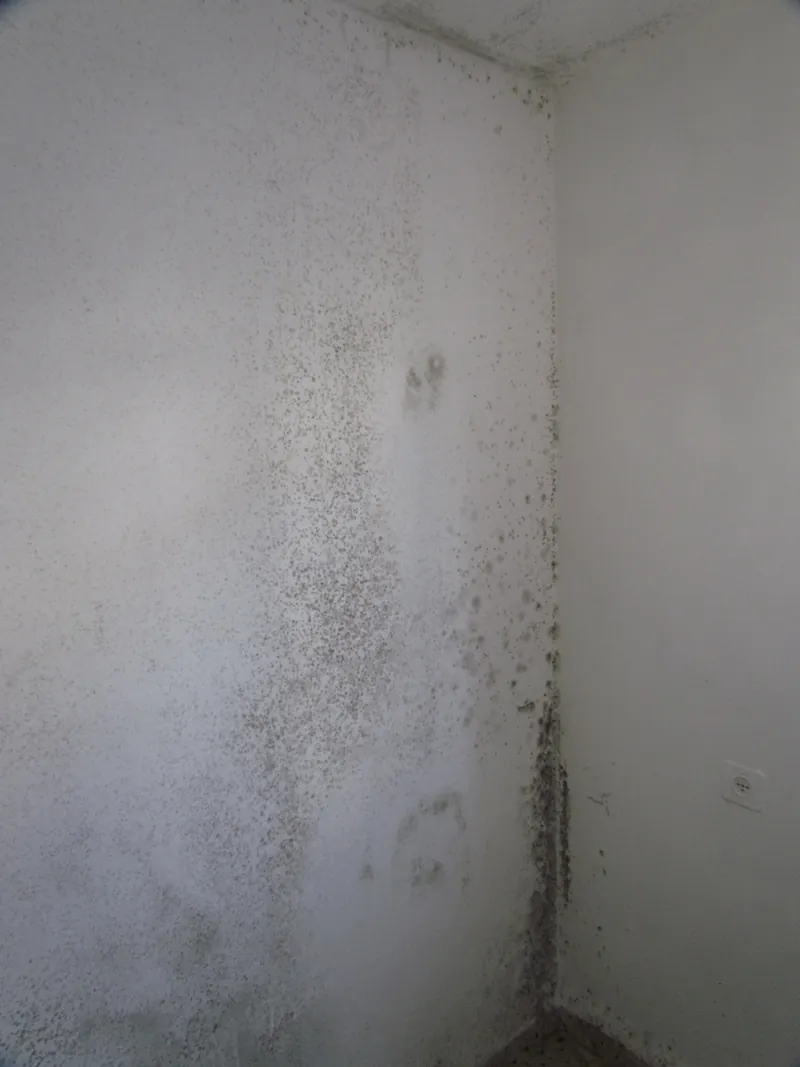

Houston houses mostly sit on slabs, so look at the garage floor, the attic and the water heater location, since leaks there are common. For a longer list, see signs of water damage.
What does a home inspector check, and what do they miss?
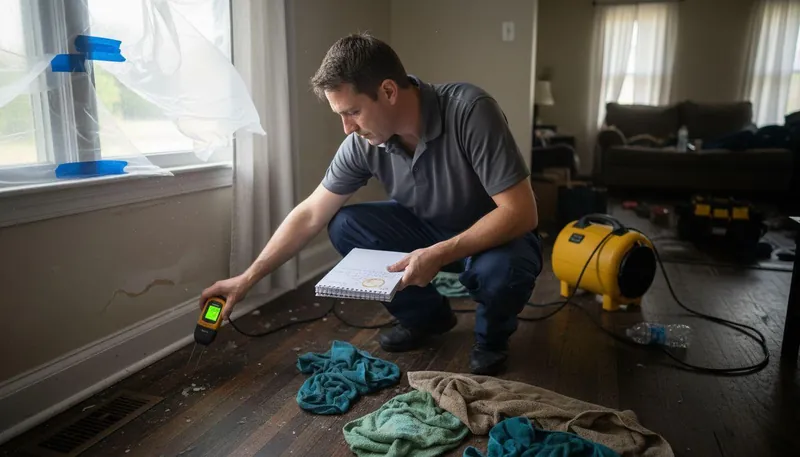
A standard home inspection is visual. The inspector reports what can be seen and reached on the day of the visit, including stains, active leaks and conditions that could lead to water trouble. Opening walls or lifting flooring is outside that scope.
So hidden damage can slip past. Water behind finished walls or under flooring may not show, particularly after it has dried and nothing is leaking during the visit. A clean water section in the report is not proof that no water ever got in.
Scan the report for wording such as staining noted, evidence of past moisture or recommend further evaluation. If it calls for more work, follow up before closing. See home inspection and water damage for what to ask, and moisture meter readings for what the numbers mean.
Should I get a flood insurance quote before closing?
Yes. Get quotes before you close, not after. FEMA says most homeowners insurance does not cover flood damage, and Triple-I says flood is a separate policy from the National Flood Insurance Program or a few private insurers. Sewer backups are another separate add-on.
A quote tells you the cost of carrying the house, and it can change your offer.
- Ask your agent for the address's flood zone and any known past claims.
- Request a flood quote and a homeowners quote before the option period ends, so you can still walk away.
- Ask whether a waiting period applies before a new flood policy takes effect, and whether closing on a loan changes that.
- Ask about sewer backup cover as a separate endorsement.
- Ask the seller for any flood claim records they are willing to share.
Per the Insurance Information Institute, about one in 60 insured homes files a water damage or freezing claim in a given year, so a past claim is fairly ordinary. Ask how your insurer handles one. The insurance claims guide covers what happens next.
What if the seller did not disclose past flooding?
Start collecting proof: photos, the inspection report, repair invoices, the disclosure notice and anything the seller or agent put in writing. Your options depend on the contract, the forms and Texas law, and this page cannot interpret those. Take a specific case to a Texas attorney.
Avoid repairs that destroy evidence until the damage is photographed. If an insurance claim is involved, speak to your insurer first.
The Texas Department of Insurance explains how claims are handled. Its claim steps page says a company has 15 business days after getting what it needs to say whether it will pay, and must explain a rejection in writing. A dispute with a seller is a legal matter and a dispute with an insurer is a TDI matter.
What should I do if I find water damage after I move in?
Shut off the source, record everything and phone your insurer before any major repair. Plenty of buyers only discover soft spots once the furniture is in. Act fast: the EPA says to dry wet materials in the first 24 to 48 hours to prevent mold growth.
- Shut off the water to the affected fixture. See the prevention guide for where the shutoffs are.
- Photograph and film everything with dates, before any cleanup.
- Call your insurer. Triple-I advises guarding the property against more damage and waiting on major permanent repairs until the adjuster has made an assessment.
- Pull the inspection report and the seller's notice to see what was noted.
- Have the area dried by a restoration provider and keep every receipt.
Flood water from outside is Category 3 under the IICRC S500 standard, grossly contaminated, so see flood cleanup before you handle it yourself. Providers differ, so confirm directly what they do.
I am selling a house with water damage. What should I do?
Repair the source, dry the house, document the work and disclose what you know. A repaired, documented leak is easier to sell than a stain with no explanation. Buyers and inspectors spot patches, and an honest record causes fewer problems than a mystery.
- Fix the source first. Drying a house with an active leak delays the next problem.
- Dry it properly. Moisture readings and a drying record from a provider help show the job is done; structural drying explains how.
- Keep invoices, photos and any warranty to hand to buyers.
- Answer the flood questions on the Seller's Disclosure Notice truthfully, and ask your agent or a Texas attorney what applies to your sale.
This site only refers callers. It is not a restoration contractor, and the independent providers it connects you with set their own terms.
Sources: Texas Legislature, SB 339 enrolled text (Property Code 5.008); HCFCD, Flood Education Mapping Tool; HCFCD, Harris County flooding history; NHC, Hurricane Harvey report; FEMA, Don't have flood insurance; Insurance Information Institute, Homeowners and Renters Insurance Facts; Triple-I, Settling insurance claims; TDI, Getting your insurance claim paid; EPA mold and moisture guide; IICRC S500.