The short version
A water damage smell is typically musty and earthy, a sign that materials are still wet or mold has begun. Air fresheners only mask it. Find where it starts, shut off the water and dry everything out, ideally in the first 24 to 48 hours, as the EPA advises. Sewage is a separate case: call a professional.
What does a water damage smell like?
A water damage smell is musty, earthy and damp, a bit like a towel forgotten in a gym bag. It usually points to materials that stayed wet long enough to let mildew or mold begin, or to water still sitting somewhere you cannot see. Treat the smell as a clue, not a diagnosis.
Descriptions vary: wet dog, a sour note from carpet, a closed-up damp-closet odor, or a sweet stale note drifting out of a wall. Each points back to moisture that never left.
This site refers callers to independent providers rather than doing restoration work, so the guide sticks to what the smell means and what to check before you call anyone. In a Houston slab house, the usual hiding spots are the attic, the walls and the flooring.
Does a musty smell mean there is mold?
Not always, but it is reason enough to investigate. A musty smell means damp materials are giving off odor, and the EPA says mold needs moisture to grow. After a leak, a storm or a humid Houston summer, assume something is wet until you prove otherwise.
According to the CDC, mold exposure can bring a skin rash, burning eyes, coughing or wheezing, a sore throat or a stuffy nose. Asthma or a mold allergy can make reactions stronger, and people with weakened immune systems or chronic lung disease may develop lung infections.
Odor without visible mold is common, because growth tends to begin inside walls, beneath flooring or in insulation. The mold after water damage guide shows what to inspect and when it makes sense to hire help.
What do different water damage smells mean?
Each smell points toward a different source. Match what you notice to the table, then verify by looking and touching. One house can have more than one smell at once, and these are common patterns, not lab results. Sorting them out narrows where to start.
| Smell | Likely source | What to do |
|---|---|---|
| Musty, earthy, damp | Materials that stayed wet: insulation, carpet pad or drywall after a leak or storm | Locate and stop the water, then dry the space. Read the humidity with a hygrometer |
| Musty when the AC runs | A clogged condensate line, a wet drip pan or wet ductwork | Check near the air handler. See AC leak water damage |
| Sour, like damp laundry | Carpet and pad that soaked and then dried too slowly | Peel back a corner and inspect the pad. See wet carpet drying |
| Sewage, sharp and strong | A sewer backup, a broken drain line or contaminated flood water | Keep everyone, pets included, out of the area and read sewage backup cleanup |
| Rotten egg at a single drain | Frequently a dry or clogged drain trap; a plumber can confirm | Run water down the drain. If the smell stays, call a plumber |
| Stale, sweet or rotting, coming from a wall or ceiling | A slow leak inside the wall cavity, soaked insulation or wet drywall | Hunt for stains and soft spots; signs of water damage lists more |
One caution on the rotten egg row: natural gas carries an added odor, and the two are easy to confuse. If the odor fills the house instead of coming from one drain, get outside, leave switches alone and call your gas utility from there.
Why does my house smell musty after an AC leak?
An air handler in the attic makes water every time it cools the air, and that water is meant to leave through a condensate drain line. If the line clogs, the pan can fill and overflow. Wet insulation and ceiling drywall then give off a musty smell.
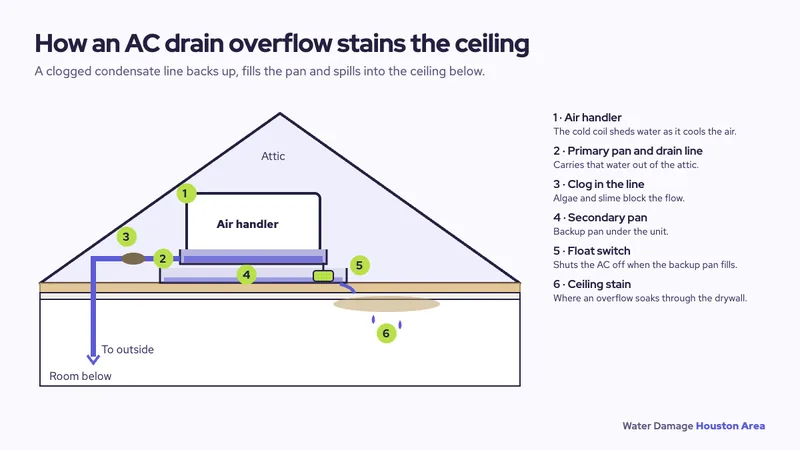
Signs of this include a stain on a ceiling below the attic unit, water in the pan, or a smell that gets worse when the system runs. Turn the system off if water is dripping and have the drain line checked.
The smell can also ride the ductwork through the house. The AC leak page explains the damage side, and ceiling water damage repair covers stains.
Can a slab leak cause a musty smell?
It can. A supply line leaking under a concrete slab can keep flooring, pad and the bottom of walls damp. The result may be a musty smell at floor level, a warm spot, or the sound of running water when everything is off. Not every slab leak smells, though.
Look for damp carpet, cupped flooring, a higher water bill than usual, or a water meter that moves with every fixture off. Slab leaks need a plumber to locate the line, so confirm with one before tearing anything out.
See slab leak water damage for the warning signs and what happens to the flooring afterward.
Why does masking the odor not fix it?
Sprays, candles and air fresheners hide the smell while the cause stays put. If the material is still damp, the odor returns and mold can keep growing behind the scent. Per the EPA, water-damaged areas should be dried in the first 24 to 48 hours, so speed counts for more than deodorizing.
The EPA also advises against painting or caulking moldy surfaces. Paint, primer or caulk over a damp wall seals the moisture in and buries the clue you need.
Order matters: fix the water, dry the material, then clean. Deodorizing comes last, and often is not needed once the source is dry.
How do I find where the smell is coming from?
Start with your nose, then check with eyes and hands. The smell is usually strongest near the source, unless the air system carries it elsewhere. Begin in the spots that stay wet in Houston homes, then move toward the living areas, noting where the smell fades.
- Check humidity. A low-cost hygrometer reads relative humidity. The EPA says to keep it below 60 percent, with 30 to 50 percent as the ideal range.
- Inspect the air handler. Check the pan, the drain line and the ceiling beneath an attic unit.
- Check the ceiling and attic for stains, especially after rain.
- Press on surfaces. Moisture is the common thread behind mushy drywall, swollen baseboard, cupped flooring and a spongy subfloor.
- Pull back a carpet corner. Sniff the pad and look for dark spots.
- Inspect plumbing. Look beneath sinks, at the base of toilets and tubs, behind the washer and around the water heater.
- Write down when it is worse. After rain, when the AC runs, or at night each give clues.
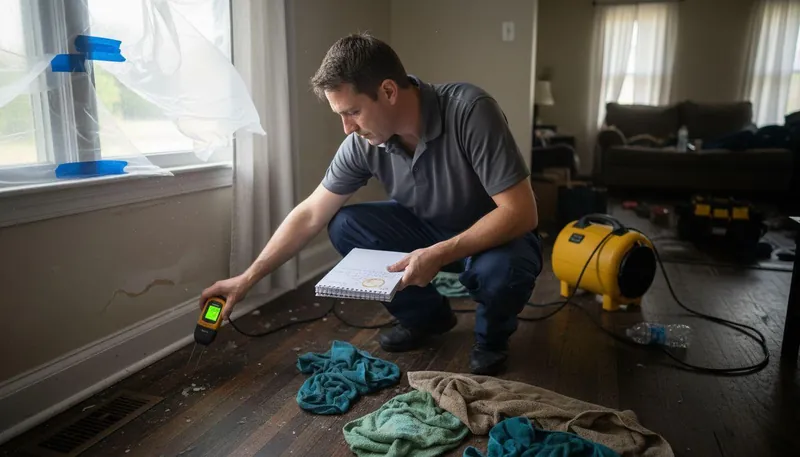
A moisture meter reads moisture inside materials instead of on the surface. Restoration providers use them with thermal cameras. If you cannot find the source, a provider with a meter can usually narrow it down.
Is a sewage smell dangerous?
Following a backup or flood, a sharp, fecal smell signals contaminated water. Treat it as unsafe until proven otherwise. Under the IICRC S500 standard, sewage is Category 3 water, the same class as rising flood water from rivers and streams, and you cannot dry that smell away.
If sewage or other contaminated water caused the damage, the EPA says to bring in a professional with experience in buildings damaged by contaminated water. Leave the fans off, since moving air through the house can spread contamination.
Kids, pets and anyone with a health issue should stay out of the area. Triple-I says sewer backups are not covered under a typical homeowners policy or by flood insurance, so ask your agent about a separate cover. See sewage backup cleanup for first steps.
Why does the smell keep coming back after cleanup?
A returning smell means moisture is still present or the source is still active. Typical causes: a slow leak nobody fixed, wet insulation or subfloor left in place, humid air that is never controlled, or a cleaned surface resting on damp material.
Walk back through the source checks above and log humidity once a day for a week. If humidity stays above 60 percent after the surface looks dry, the building is holding water or taking more in.
The CDC says a flooded home should be cleaned and dried fully and quickly, so a smell weeks afterward suggests part of that job was missed. For hard surfaces the CDC lists household cleaner, soap and water, or at most 1 cup of household bleach per 1 gallon of water, and warns never to mix bleach with ammonia. Porous items that stayed wet usually need replacing.
When should I call a restoration provider?
Make the call if you cannot find the source, the smell followed a flood or sewage, or you think water is inside walls or under flooring. Sooner beats later, since the EPA's drying window is the first 24 to 48 hours; if a smell is still around, that window may be closed.
Services vary by provider, so check with each company on whether it offers moisture assessment, drying or odor work, and request readings and photos. A provider you reach through this site sets its own terms.
Standing or visible water belongs with emergency water damage restoration. For what jobs tend to cost, see water damage restoration cost in Houston.
Sources: IICRC S500; Triple-I, Which disasters are covered; CDC, About Mold and Your Health; EPA, Brief Guide to Mold, Moisture and Your Home; EPA, Mold Cleanup in Your Home.