The short version
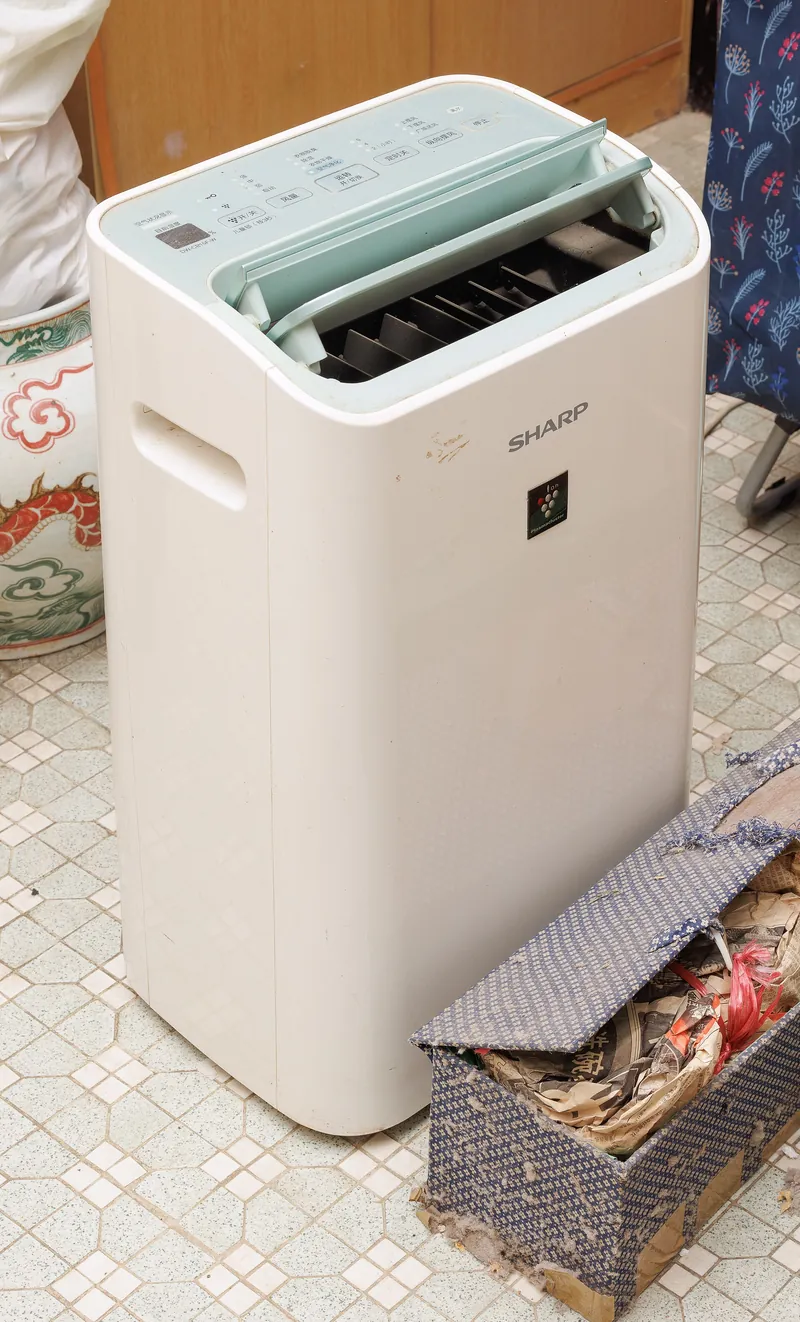
Water mitigation in Houston is the work that keeps a water loss from growing. A provider inspects, pumps out standing water, pulls wet materials that cannot dry, runs dehumidifiers and air movers and records moisture readings. The EPA advises drying wet areas in the first 24 to 48 hours. Rebuilding is restoration and comes afterward.
What is water mitigation in Houston?
Water mitigation is the emergency phase of a water loss: stop the source, pull out the water, remove what cannot be saved and dry the structure. The aim is to keep the damage from spreading. In Houston that covers burst pipes, roof leaks, AC overflows and storm water alike.
You will also see it called water remediation, water damage mitigation or emergency water mitigation. Providers use these labels loosely, so ask what a quote actually includes instead of trusting the name.
That is why mitigation leads: the EPA advises getting water-damaged areas dry in the first 24 to 48 hours to head off mold. This site refers Houston-area property owners to independent restoration providers. It is not a contractor, and each provider sets its own scope and terms.
Is water mitigation the same as water damage restoration?
Not quite. Mitigation holds the damage in check and dries the structure, and restoration repairs and rebuilds afterward. A single provider can do both, yet each phase has its own goal, paperwork and sometimes bill, and an insurer may treat them differently.
| Mitigation | Restoration | |
|---|---|---|
| Goal | Stop the spread and dry the structure | Return the property to its earlier condition |
| Starts when | Once the source is shut off and the space is safe | The structure reads dry |
| Typical work | Extraction, tear-out, drying equipment, readings | Drywall, insulation, flooring, trim, paint |
| Insurance angle | Take reasonable steps to prevent more damage | Usually follows the adjuster's assessment |
The insurance row reflects Triple-I guidance on settling claims. The rest describes how the phases generally run. Confirm directly whether one provider will do both. For the rebuild side, see water damage repair in Houston.
What happens on the first water mitigation visit?
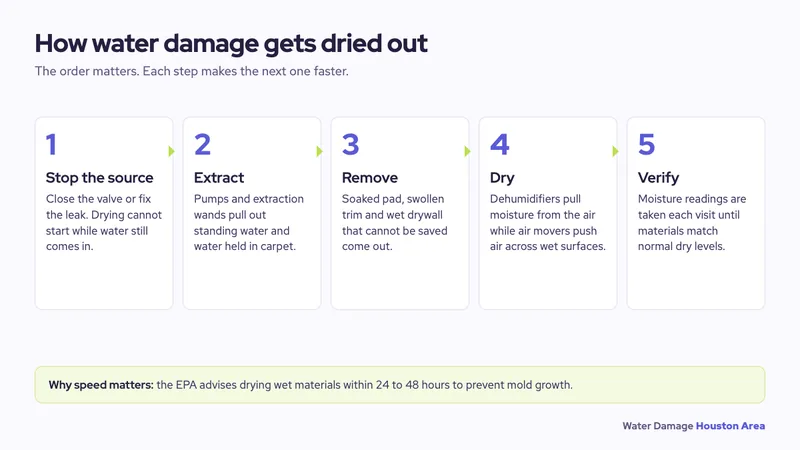
Expect inspection, extraction, tear-out of materials that cannot dry, and equipment setup. Good providers also note baseline conditions at the start, which gives the job something to be measured against. The order shifts with the damage, but the steps below are typical.
- Make it safe. Someone shuts off the water first, either you or a plumber. Then the provider looks for electrical and slip hazards.
- Classify the water. Under IICRC S500, Category 1 is clean supply water, Category 2 covers grey water, meaning washer or dishwasher discharge and toilet overflow with no waste in it, and Category 3 is grossly contaminated, such as sewage or rising flood water.
- Map the moisture. A meter, and often a thermal camera, shows how far water went into walls, floors and ceilings.
- Extract. Pumps and wand tools lift standing water out of carpet and flooring; water removal and extraction has the detail.
- Remove what cannot dry. Soaked pad, swollen trim and saturated drywall often come out.
- Set equipment. Air movers push air across wet surfaces and dehumidifiers pull moisture from the air.
- Log readings. Each visit adds readings until materials are dry.
Category 3 water changes the plan, since porous materials usually come out instead of drying in place. For flood water, read flood damage restoration. For sewage, see sewage backup cleanup and stay out of it.
How does moisture mapping decide what gets removed?
Moisture mapping is the survey that sorts materials into dry-in-place and tear-out. Water wicks up drywall and runs along framing, so the wet zone is often larger than the visible stain. Readings at marked spots show the true edge and can be repeated each visit.
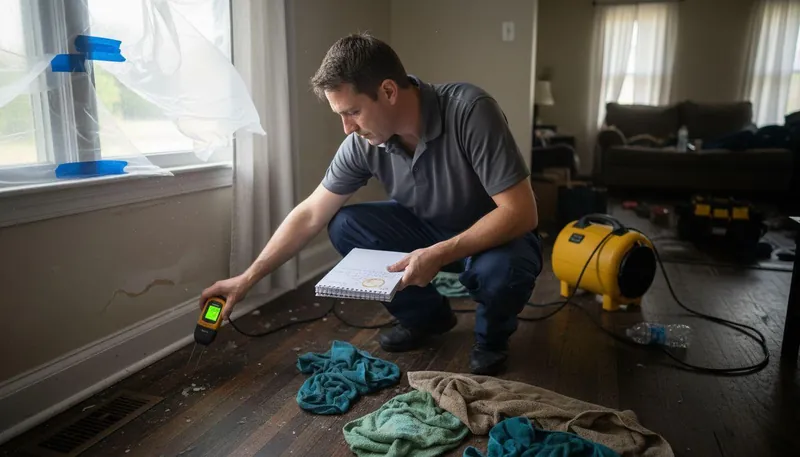
Tearing out wet material feels drastic, but it speeds drying and lowers the chance of hidden mold. Ask the provider to photograph the area before removal and to show the readings behind each decision. See moisture meter readings for what the numbers mean.
How long does water mitigation take?
Drying should start in the first 24 to 48 hours, the EPA's window for preventing mold growth. The total time then depends on the water category, the materials and how far water spread. This site has no verified Houston figure to quote, so ask the provider for target readings and a review date instead.
Readings decide when drying is finished, not a set number of days on the clock. The provider should measure wet areas against an unaffected spot of the same material.
The EPA advises keeping indoor humidity below 60 percent, ideally between 30 and 50 percent. If equipment is still running with no readings to explain it, ask what number it is trying to reach. The structural drying page covers drying goals.
What is a dry log and what should it show?
The dry log is a day-by-day record of readings, conditions and equipment. It proves the drying worked, and it is the first thing to pull out when an insurer or anyone else questions the bill. Ask to see it at every visit.
- Moisture readings at the same marked spots, with dates.
- Humidity and temperature indoors, measured against the EPA range noted earlier.
- Equipment in place: the count of air movers and dehumidifiers and their locations.
- Changes to the equipment, each with a reason.
- Photos before, during and after.
Keep it with your claim file.
Can you dry a Houston house yourself?
For a small clean spill caught fast, often yes. For anything bigger, a rented dehumidifier alone usually falls short, because water in walls, insulation and under flooring is out of its reach. Use the table to judge which side of the line you are on.
| Situation | Do it yourself | Professional drying |
|---|---|---|
| Small clean spill on tile | Often fine: mop, run fans, watch it | Usually not needed |
| Soaked carpet and pad | Risky: pad holds water | Extraction and pad removal |
| Water in walls or under flooring | No way to measure it | Meters and targeted drying |
| Grey or black water | Unsafe to handle | Needed |
The EPA says contaminated water calls for a professional. If you go the DIY route, still hit the 24 to 48 hour window, then watch for a musty smell. The mold guide explains what to do if one appears.
How much does water mitigation cost?
Whole jobs land in the low thousands nationally. Fixr (updated January 31, 2025) reports an average of $3,000 inside a range of $1,200 to $5,000 for water damage restoration. Treat these as national figures rather than Houston quotes.
| Fixr national figure | Cost |
|---|---|
| Clean-water extraction, per sq ft | $3.75 to $4.25 |
| Gray-water extraction, per sq ft | $4.10 to $6.50 |
| Black-water extraction, per sq ft | $7 to $7.50 |
| Class 1 damage, flat | $150 to $400 |
| Class 2 damage, flat | $500 to $1,000 |
| Class 3 damage, flat | $1,000 to $3,000 |
Every figure in this section comes from Fixr, Water Damage Restoration Cost. This site cannot say what any provider will charge. See water damage restoration cost in Houston for more.
Does insurance pay for water mitigation?
Often it does, provided the water had a covered cause. Per the NAIC, plumbing leaks and roof leaks are typically covered, while ground water and rain runoff are not. Triple-I notes that standard policies exclude flood and that sewer backup requires its own coverage.
Triple-I's after-loss advice fits mitigation well:
- Contact your agent or insurer right away.
- Take reasonable steps to protect the property from more damage.
- Wait on major permanent repairs until the adjuster has looked at the damage.
- Take photos, and keep damaged items until the adjuster has visited.
- Save receipts and get written bids, line by line.
The Texas Department of Insurance says a company has 15 business days to acknowledge a claim. After Winter Storm Uri, TDI counted 112,163 reported claims in Harris County, where freezing pipes were among the damage. The insurance claims guide covers the sequence.
How do you read a mitigation invoice?
A clear invoice breaks out every charge with a quantity beside it, while a poor one gives a single lump sum. Most billing disputes begin with an invoice nobody could check against the work. Request the items below before you pay or sign off.
- Line items. Extraction, tear-out, equipment and labor priced separately.
- Equipment counts and days. Match them to the dry log.
- The dry log that justifies keeping equipment running.
- Photos of removed materials and affected rooms.
- Insurance handling. Who bills the insurer, and what happens if it pays less.
Red flags: a price given over the phone with no inspection, pushing you to sign before the adjuster is called, and machines running with no readings behind them. Texas residents can contact TDI at 800-252-3439 or through its complaint page about an insurer. Read the mitigation invoice explained line by line.
What should you ask before signing a work authorization?
Never sign a blank or half-completed form, and read the whole thing first. This paper is a contract: it may assign your insurance benefits, allow direct billing to your insurer or set lien terms if a bill goes unpaid.
- Is the scope mitigation only, or does it commit me to the rebuild?
- Are charges per item, per day or one flat total, and what moves the number?
- If the insurer covers only part, who covers the rest?
- Does the form assign my benefits to the provider?
- What reading tells the provider the equipment can leave, and when?
Answers vary by provider, so confirm each one directly. Should you be referred through this site, the provider's terms are its own, and this site is not a party to that contract. The guide to choosing a restoration company has more questions.
What happens after water mitigation?
Once readings show the structure dry, the equipment goes and rebuilding can start: insulation, drywall, flooring, trim and paint. Adjusters usually inspect before permanent repairs begin, so hold off on rebuilding yourself and keep the drying paperwork.
File the dry log, photos and invoices in one place. A musty smell weeks later is easier to trace when the log records what was dried and how. For a storm loss, see roof leak and storm water damage.
Sources: EPA, A Brief Guide to Mold, Moisture and Your Home; EPA, Mold Cleanup in Your Home; IICRC, S500 standard; Fixr, Water Damage Restoration Cost; NAIC, Homeowners Insurance; Triple-I, Which disasters are covered; Triple-I, Settling claims; TDI, Getting your claim paid; TDI, Winter Storm Uri losses report; TDI, complaint page.