The short version
To prevent water damage in Houston, build a few habits: know and test your house shutoff, insulate pipes before a freeze, keep the AC drain line clear, inspect the water heater and hoses each season, and review flood coverage ahead of storm season. If a leak gets through, close the valve and get the drying started fast.
How do I prevent water damage in my Houston home?
Start with your shutoff valve, then work through the parts that fail most: hoses, heaters and the AC drain line. Houston adds two big risks, freezes and heavy rain, so plan for both. Most water damage begins small, with a worn hose or a clogged line, and a short routine catches it.
Upkeep matters for coverage too. According to Triple-I, insurance policies exclude damage caused by lack of maintenance, and keeping the home in repair is the owner's responsibility, so each check below also strengthens a future claim.
These claims are not rare. Triple-I reports that roughly one in 60 insured homes files a property damage claim for water damage or freezing in a given year.
Where is my main water shutoff, and how do I test it?
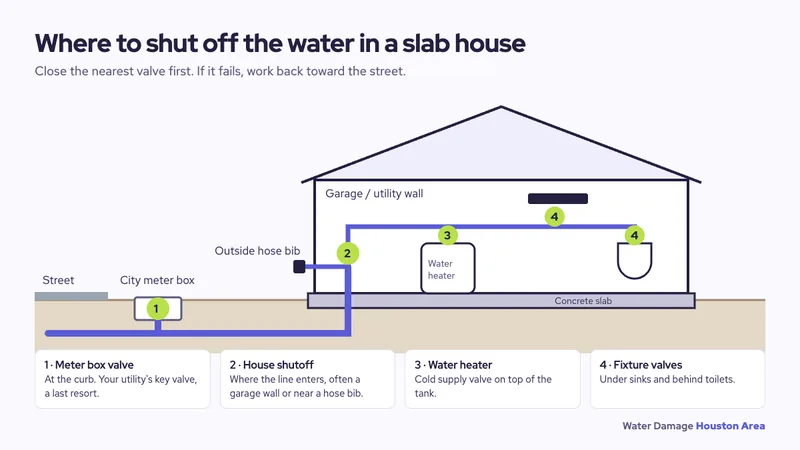
Houses usually have the shutoff where the supply line enters, often along an outside wall, in a closet or in the garage. Do your searching before an emergency, when nothing is running across the floor. A slab house has no lower level to hide it, so check the exterior walls.
- Find the main valve and move whatever blocks access to it.
- Close it all the way. A lever is closed when it sits crosswise to the pipe. A round wheel handle closes by turning clockwise.
- Run a faucet to confirm the flow stops.
- Reopen the valve slowly and look for drips around the stem.
- Tag it so anyone in the household can spot it.
Call a plumber if the valve is stiff, will not seal fully or leaks at the handle, before you depend on it. The meter box valve at the street belongs to the utility.
Do I need to test the fixture valves too?
Yes, test them too. The small stops under sinks and behind toilets shut off a single fixture while the rest of the house keeps its water. They are also the valves most likely to seize from disuse, which is exactly why a test is worth doing.
Close each valve, then reopen it slowly and look at the stem for drips. Treat the cold inlet valve on the water heater the same way. If a valve will not turn, leave it alone and ask a plumber, since forcing one can snap it and cause the very leak you wanted to avoid.
How do I protect pipes before a Houston freeze?
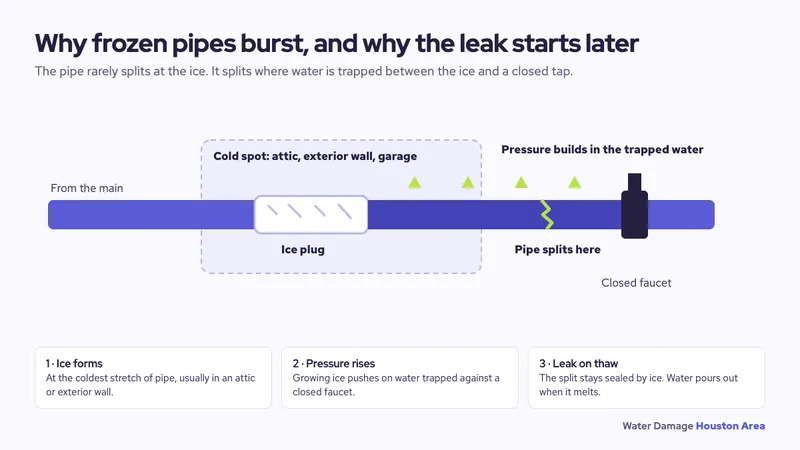
Protect the pipes the American Red Cross lists as most at risk: supply lines in unheated areas such as attics, garages and kitchen cabinets. If your plumbing runs through an attic, a garage or an exterior wall, a long freeze can reach it.
The Texas Department of Insurance reported that most of Texas had frigid cold, ice and snow from February 11 to 19, 2021, with freezing pipes among the damage. By June 30, 2022, Harris County had 112,163 reported claims from Winter Storm Uri.
- Disconnect garden hoses and cover outdoor spigots.
- Insulate exposed pipes in the attic and garage.
- Leave cabinet doors open along exterior walls so room heat can reach the pipes.
- Let a faucet on an exposed line drip cold water, as the Red Cross advises.
- Hold the thermostat at one temperature around the clock.
- Know where the house shutoff is before the freeze starts.
If a pipe does freeze, the burst pipe guide covers thawing and what to do if it splits.
What should I do when the house will be empty in a freeze?
Pick one of two approaches: keep the house heated, or turn off the water supply and drain the plumbing. If you stay heated, the Red Cross says the setting should be no lower than 55 F, kept steady day and night, with cold water dripping from faucets on exposed pipes while you are away.
Ask a neighbor or a plumber to look in. When nobody is home, a failure can go unseen for days, and some policies set conditions for vacant homes, so read yours.
To thaw frozen pipes, the Red Cross lists a hair dryer, an electric heating pad, towels soaked in hot water, or a portable space heater set well away from flammable items. It warns against any open flame, such as a blowtorch, a charcoal stove, or a kerosene or propane heater.
How do I get my house ready for hurricane season?
Check the roof, seal what you can, clear drainage and review your flood coverage before a storm is named. Hurricane Harvey is the benchmark: the National Hurricane Center reported that 36 to 48 inches of rain fell in the Houston metro area, and at least 160,000 structures flooded in Harris and Galveston counties combined.
Wind and rain cause different problems. Hurricane Beryl in 2024 brought what the National Weather Service called 4 to 8 inches of rain on average, with swaths of 10 to 15 inches, plus numerous trees and power lines down.
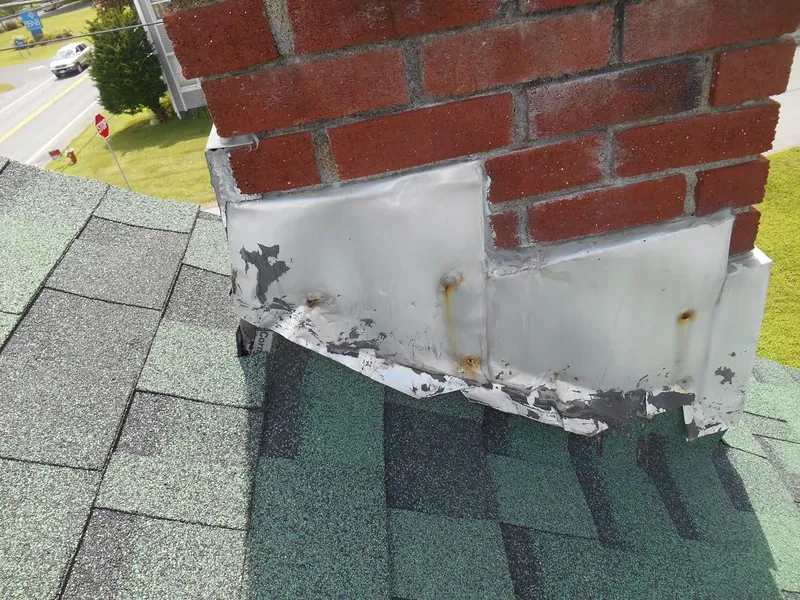
- Look at roof flashing, vents and shingles for gaps. See roof leak storm water damage.
- Trim limbs that could fall on the roof.
- Clear gutters and keep yard drains open.
- Photograph each room and the exterior now, so you have a record before any claim.
- Read the hurricane water damage guide for what happens afterward.

How do I care for the AC drain line and attic air handler?
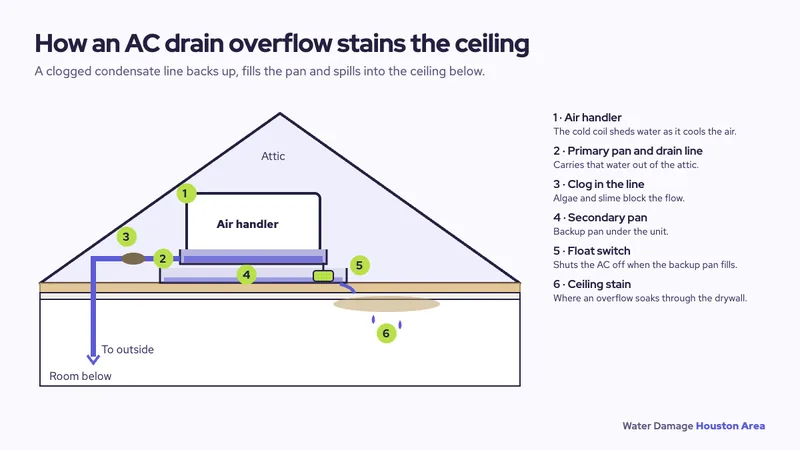
Keep the condensate drain line clear and know whether your air handler has a float switch. When the line clogs, the pan fills and water can overflow into the ceiling below. This is one of the most common hidden leaks in a Houston house with an attic unit.
These are general maintenance steps, and an HVAC technician can set them up for your system.
- Ask your HVAC technician to flush the drain line during routine service.
- Check that the pan under the attic unit is dry when you are up there.
- Ask whether a float switch is installed. It can shut the unit off when the pan fills.
- Watch ceilings below the unit for a new stain after the AC runs.
The AC leak page covers cleanup after an overflow.
Which water heater, hose and appliance parts should I check?
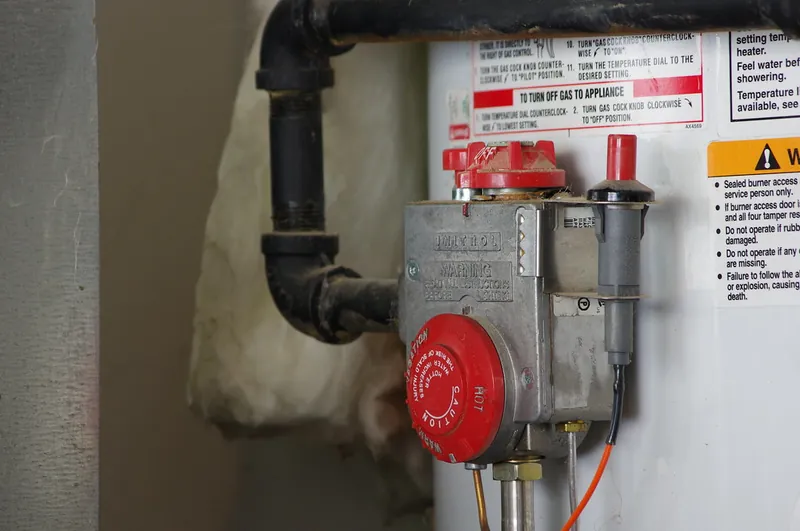
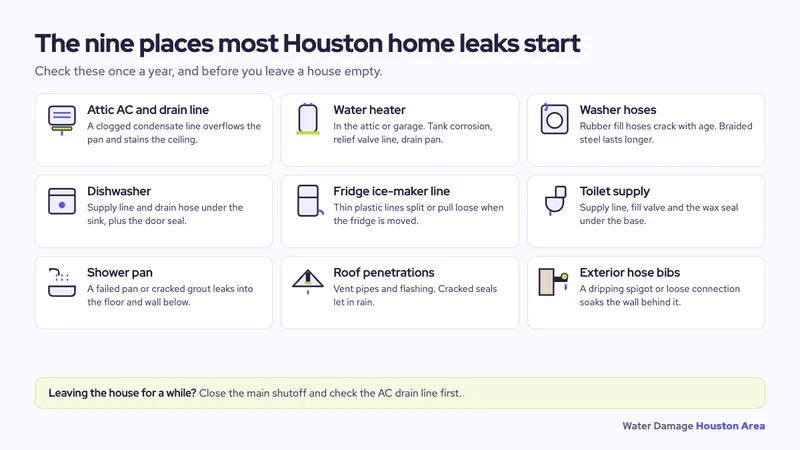
Check the water heater, washer hoses, dishwasher and refrigerator lines, toilet supply lines and the shower pan each season. These parts tend to fail from age and wear, not from storms. A bulge, a rust trail or a damp spot is a reason to call a plumber.
- Water heater: look for rust at the base and drips at the relief valve and fittings. If it sits in the attic or garage, consider a drain pan and ask a plumber about a pan drain.
- Washer: look at both hose connections for bulges or rust, and close the valves when you travel.
- Dishwasher and refrigerator: pull the unit out gently and check the supply line and the floor behind it.
- Toilets and sinks: check the supply lines and the floor around the base for soft spots.
For details on specific failures, see water heater leaks and appliance leak water damage.
Are water leak sensors and automatic shutoff valves worth it?
A leak sensor alerts you and an automatic shutoff valve closes the line itself. Which one fits depends on how often the house sits empty and how much you can check on it. Plumbers can tell you what your plumbing supports.
- Put sensors where leaks start: under the water heater, behind the washer, by the dishwasher, in the attic drain pan and at the base of toilets.
- Replace sensor batteries when you change smoke alarm batteries.
- An alert only helps if someone sees it, so send it to a phone you check.
- Ask a plumber about an automatic shutoff if you travel often.
Neither device replaces checking the parts above.
How do I protect my home from flooding and heavy rain?
Keep roof and yard runoff moving away from the house, find out whether you are in a mapped flood zone and buy flood insurance before you need it. Houston is wet: the National Weather Service lists a 1991 to 2020 normal of 51.84 inches of rain a year at Bush Intercontinental Airport.
Standard homeowners policies do not cover flood. FEMA says most homeowners insurance does not cover damage from flooding. Triple-I adds that flood coverage has to be bought separately, either through the NFIP or from one of a few private insurers, and that sewer backups are covered separately, often as an endorsement.
- Look up your address on the Harris County Flood Education Mapping Tool. HCFCD says it is not the effective FIRM, which you view by address on FEMA's Map Service Center.
- Ask an insurance agent when a new flood policy would begin, since a waiting period applies to new coverage.
- Keep gutters clear and downspouts pointing away from the foundation.
- Ask about a backwater valve if sewage has backed up in your area.
See flood zones in Houston and why Houston floods for the map and the causes.
What should I check each season?
A short pass each season covers most common causes, and the table below gives a Houston-specific order. Use it as a starting list and adjust it for your house, its age and where the water heater and air handler sit.
| Season | What to check | Why |
|---|---|---|
| Spring | Roof, gutters, AC drain line, grading and downspouts | Heavy rain tests every drainage path, and the AC is about to run hard |
| Summer | Hurricane readiness, attic drain pan, appliance hoses, leak sensor batteries, humidity | Storm season and constant AC use favor leaks and mold |
| Fall | Flood and homeowners coverage review, roof flashing, hose bibs, water heater | Fix problems before the first cold front |
| Winter | Pipe insulation, spigot covers, drip plan, vacant home plan | A freeze splits pipes where water is trapped, and the leak shows on thaw |
Per the EPA, indoor humidity should stay under 60 percent, with 30 to 50 percent the ideal range, and that also keeps damp areas from becoming mold problems.
What do I do the moment I find a leak anyway?
A leak can still happen after all your prevention, so keep a short plan ready for the first minutes. Cut off the water, secure the area and begin drying. The five steps below run in that order, and the first two matter most.
- Shut the closest valve, or the main shutoff when you cannot tell which one feeds the leak.
- Cut power to the wet area at the breaker, and only when you can reach the panel on dry footing.
- Photograph the source and the damage before you move anything.
- Notify your insurer. Triple-I advises taking reasonable steps to protect the property and holding off on major permanent repairs until the adjuster has assessed it. The insurance claims guide has more.
- Get extraction and drying going. The EPA recommends drying water-damaged areas in the 24 to 48 hours after the leak, which heads off mold. Emergency water damage restoration is the page for being connected with a provider.
What each provider offers varies, so confirm with whichever provider you reach before work begins. Contact us to be connected.
Sources: TDI, Winter Storm Uri report; NHC, Hurricane Harvey report; NWS Houston/Galveston, Hurricane Beryl summary; NWS Houston/Galveston, IAH normals; FEMA, Don't have flood insurance; HCFCD, Flood Education Mapping Tool; American Red Cross, Frozen Pipes; EPA, A Brief Guide to Mold, Moisture and Your Home; Triple-I, Facts and Statistics; Triple-I, Which disasters are covered by homeowners insurance; Triple-I, Settling insurance claims after a disaster.