The short version
An AC leaking water in Houston is usually a clogged condensate drain line overflowing the pan under the air handler. Turn the system off, catch the water, and call an HVAC technician for the cause. Wet insulation and ceiling drywall need drying within 24 to 48 hours to avoid mold.
Why is my AC leaking water in Houston?
If your AC is leaking water in Houston, the cause is most often the condensate drain. Your system pulls moisture out of the air as it cools, and that water is supposed to leave through a drain line. When the line clogs, the pan fills and spills. Houston's humid air gives the system plenty of water to carry.
The water then shows up where the air handler sits. In many Houston homes that is the attic, so the first sign is often a stain on the ceiling below. The water mitigation page explains the drying work that follows.
| Cause | What you notice | Who usually fixes it |
|---|---|---|
| Clogged drain line | Water in the pan, a ceiling stain, a system that shuts off | HVAC technician |
| Cracked or rusted pan | Drips from the pan even when the line is clear | HVAC technician |
| Frozen evaporator coil | Weak airflow, ice on the coil, a flood when it melts | HVAC technician |
| Sweating duct or pipe | Beads of water on cold surfaces, wet insulation | HVAC technician |
| Wet ceiling and drywall | Stains, sagging, soft spots, a musty smell | Restoration provider, then a repair contractor |
What should I do first when my AC is leaking?
Turn the system off at the thermostat, and at the breaker if you can reach it safely. A running system keeps making water. Then catch what is dripping, protect the floor and ceiling below, and call an HVAC technician for the cause.
- Switch the AC off at the thermostat. Turn off the air handler breaker too if it is safe to reach.
- Stay out of an attic with standing water or wet insulation. Wet insulation near wiring is a hazard.
- Set buckets and towels under drips, and move furniture out of the wet area.
- Check the ceiling. If it bulges with water, see how to drain a bulging ceiling safely.
- Photograph the pan, the stain and any water before you clean up.
- Call an HVAC technician, then a restoration provider if the ceiling, walls or insulation are wet.
Do not run the system again until the drain is clear. It will only refill the pan.
How does a clogged condensate line cause a leak?
Algae, slime and dust build up inside the drain line until water cannot flow out. The water backs up into the pan under the air handler, fills it, and overflows onto whatever is underneath. In an attic, that is the ceiling.
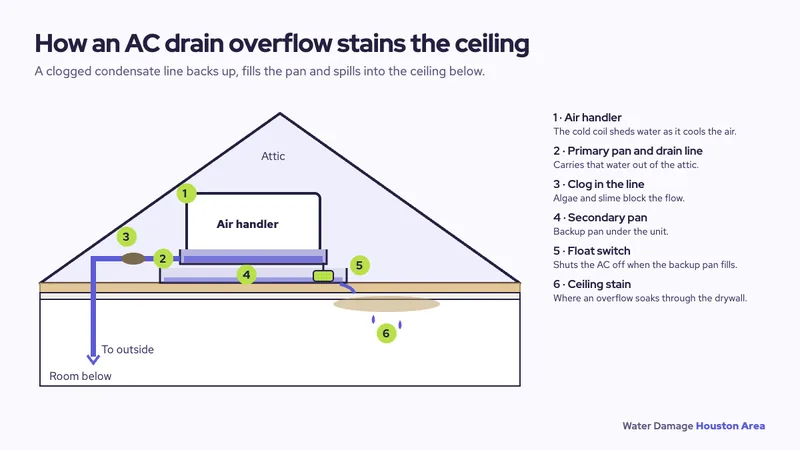
The drain line is usually a plastic pipe that runs from the air handler to the outside or to a drain. It is small, so it clogs easily. A technician can clear it, and some homeowners flush it as part of maintenance. Ask the technician what is safe to do yourself.
The EPA says to keep air conditioning drip pans clean and the drain lines unobstructed and flowing properly. That is the same advice, written as a maintenance task.
What are the primary pan, secondary pan and float switch?
The primary pan sits under the coil and catches the condensate. A secondary pan sits below the whole air handler as a backup, and a float switch shuts the system off when water rises. These parts exist so one clog does not become a ceiling collapse.
- Primary drain pan: catches water from the coil and sends it to the drain line.
- Secondary pan: a larger pan under the unit. Water here means the primary drain has failed.
- Float switch: a safety switch that stops the system when the pan fills. If it is missing or stuck, water keeps coming.
- Secondary drain outlet: some systems have a second drain that spills where you can see it, such as above a window. Water dripping there is a warning.
Which of these your home has depends on how and when the system was installed. Ask your HVAC company, and confirm directly what they can add. The prevention guide covers other protective devices.
How do I tell where the water is coming from?
Look at the timing, the place and the temperature of the water. AC condensate is cool and clear. Water that appears only while the system runs points to the air handler. Water that stays after the system is off may be from a pipe or a roof.
- Only when the AC runs: the condensate drain, a pan, or a frozen coil.
- Warm water or steady flow: look at the water heater and supply lines. See the water heater leak page.
- After rain only: likely a roof leak. See roof leak and storm damage.
- Beads on a cold pipe or duct: condensation, not a leak in the line.
The signs of water damage guide and the sudden vs gradual leaks page help sort a one-time overflow from a slow drip.
What damage does an attic AC leak do to the ceiling?
Water soaks the attic insulation first, then the drywall below it. A drain that overflows now and then leaves a brown ring that comes back each time. A steady leak can soften the drywall until it sags. The damage is often wider than the stain.
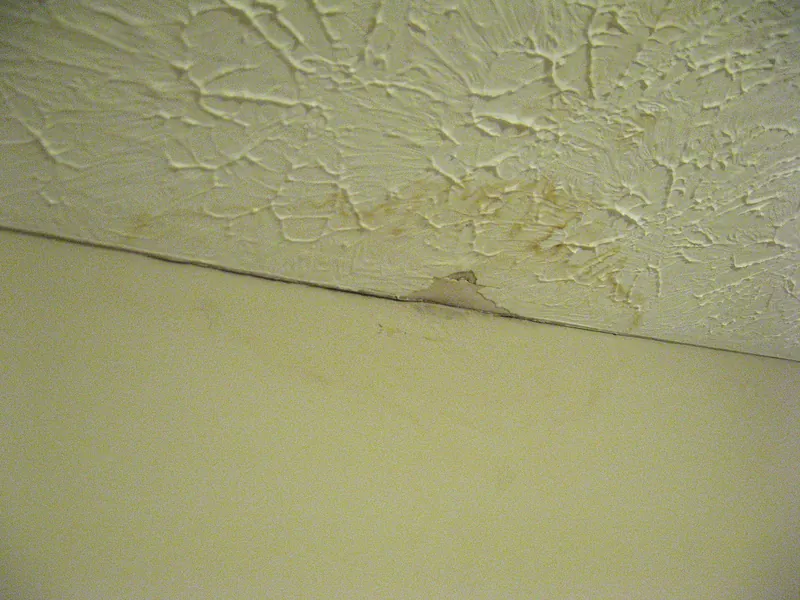

- Insulation: wet insulation loses its value and holds water against the drywall.
- Drywall: stains, softens and may sag. Soft or sagging drywall usually has to come down.
- Paint and texture: stains bleed back through new paint unless the source is fixed.
- Wiring and light fixtures: water can reach them. Keep the power off to a wet ceiling.
Read drywall water damage repair for what happens to the wall and ceiling board, and water damage repair for the rebuild.
Is a sweating duct or cold pipe the same as an AC leak?
No, but the damage can look alike. Cold ducts and pipes collect moisture when warm, humid air touches them. In Houston's humid air, that can drip onto insulation and ceilings. The fix is usually insulation or sealing, not a drain repair.
The EPA says condensation on pipes and other surfaces is a sign of high humidity. It also shows a rusted drainpipe as a sign that condensation occurs there, and says the pipe should be insulated to prevent it.
- Torn or missing duct wrap lets cold metal sweat.
- Gaps around the air handler let humid attic air reach cold parts.
- Uninsulated drain or refrigerant lines drip in a line along their length.
An HVAC technician can tell sweating from a leak on one visit. Provider methods differ, so ask what they check.
Can an AC leak cause mold?
Yes, if the wet materials stay wet. The EPA says that if wet or damp materials are dried within 24 to 48 hours after a leak, in most cases mold will not grow. An attic leak can sit unseen for days, so insulation and the back of the ceiling drywall are common trouble spots.
The EPA names ductwork and the top side of ceiling tiles among places where hidden mold can grow after water damage.
- Humidity: the EPA advises keeping indoor humidity below 60 percent, ideally between 30 and 50 percent.
- Small patches: the EPA says mold under about 10 square feet is usually something most people can handle.
- Larger or hidden mold: bring in a professional. The EPA says not to paint or caulk over it.
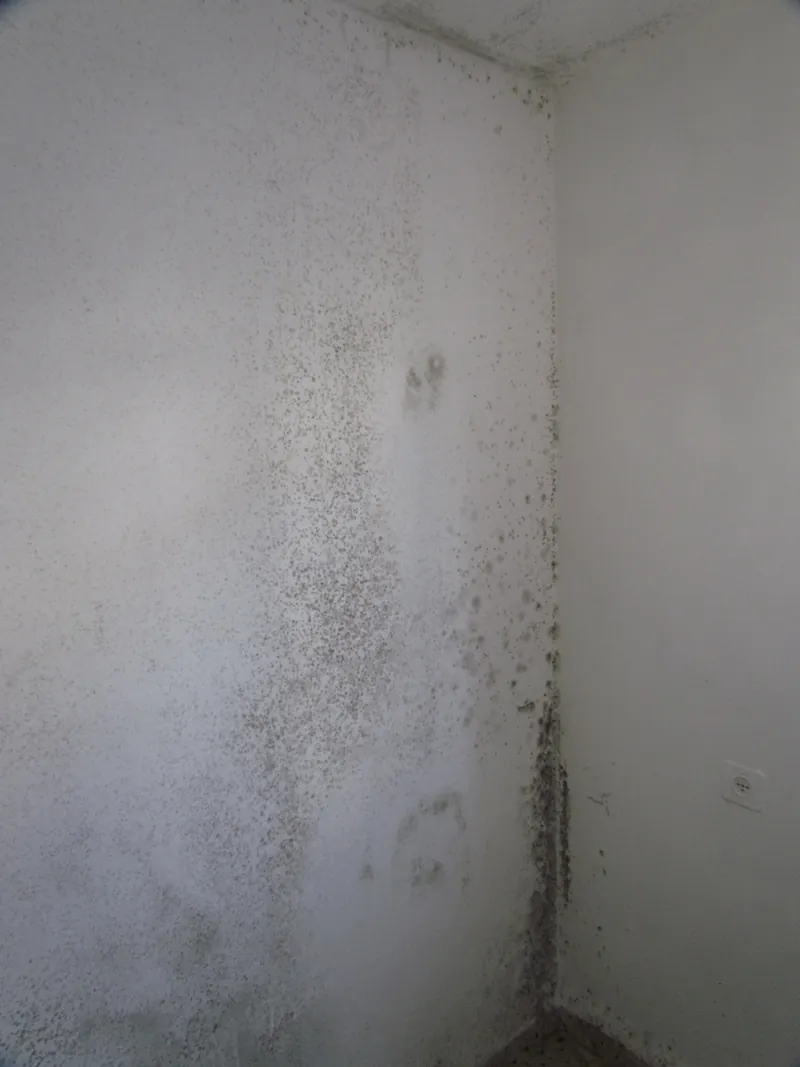

The mold after water damage guide says when to test and when to call for removal.
Does homeowners insurance cover AC leak water damage?
Often it covers the water damage, though not the AC repair. Triple-I lists accidental discharge or overflow of water from plumbing, heating and air conditioning systems among the named perils on standard forms. Maintenance problems and mold are treated differently.
Triple-I says policies will not cover damage due to lack of maintenance. A drain that clogged because it was never serviced may be argued as a maintenance issue, so read your policy and ask your insurer. The NAIC adds that homeowners policies often exclude mold.
- Call your insurer early and take reasonable steps to protect the property.
- Photograph the pan, stain and attic before cleanup.
- Save receipts for emergency work.
- Keep damaged items until the adjuster visits, and get written bids.
The insurance claims guide walks through the steps. For scale, Triple-I reports an average water damage and freezing claim of $15,400 (2019 to 2023), across all causes.
How do I stop my AC drain from overflowing again?
Service the drain on a schedule, check the pan and float switch, and watch for early warnings. The EPA lists clean drip pans and open drain lines as part of moisture control. A small habit now avoids a ceiling repair later.
- Have the drain line cleared as part of regular system service.
- Ask about a float switch on the primary and secondary pans, and whether yours works.
- Replace dirty filters on the schedule your system calls for, since a restricted airflow can freeze the coil.
- Look at the secondary outlet or pan now and then if you can reach it safely.
- Insulate bare cold lines and seal torn duct wrap.
Ceiling stains from the attic can also come from the water heater or the roof. See the appliance leak page for the other usual suspects.
Sources: EPA, A Brief Guide to Mold, Moisture and Your Home; EPA, Mold Cleanup in Your Home; Triple-I, Which disasters are covered by homeowners insurance?; Triple-I, Settling insurance claims after a disaster; NAIC, Homeowners Insurance; Insurance Information Institute, Homeowners Insurance Facts.