The short version
For drywall water damage repair in Houston, the water category and the time the wall stayed wet decide the outcome. A wall hit by clean water and treated early may dry where it stands. Board that took contaminated water, sags, or stayed wet beyond 24 to 48 hours usually comes out. Hold off on paint until the wall is dry.
Can water damaged drywall be dried, or does it have to come out?
It depends. Two things decide it: the category of water that soaked in, and how long the wall stayed wet. Board hit by clean water and dried quickly often survives, while board that took contaminated water or soaked for a long stretch normally gets cut out.
Do not judge by looks. A restoration provider reads the wall with a moisture meter, because a panel can seem normal while the cavity behind it still holds water. Providers vary in how they test and what they advise, so ask to see readings from before and after drying.
To see how drying and rebuilding fit together overall, read water damage repair in Houston.
Does wet drywall need replacing after a clean water leak?
Not necessarily. A wall soaked by a supply line or an attic pipe carrying clean water may be salvageable if drying starts promptly. The EPA advises getting water-damaged areas and items dry in the first 24 to 48 hours, because that is how mold growth is prevented.
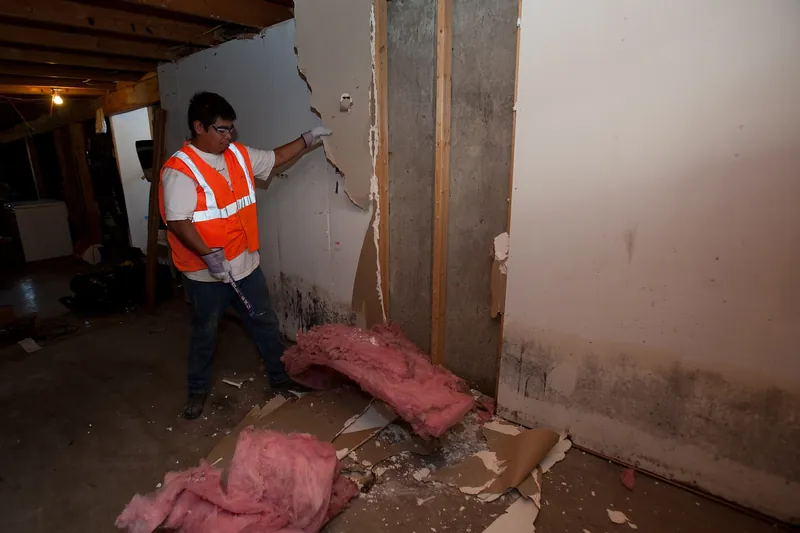
Board that has drooped, crumbled, split at the seams or turned soft is another matter. Once paper-faced gypsum has deformed it rarely bounces back. Expect to replace it and dry out the framing behind it.
The IICRC S500 standard sorts water into three tiers. Category 1 is the clean kind, from a supply line or a burst pipe. Category 2 covers grey water, such as a washer, dishwasher or waste-free toilet overflow. Category 3 is grossly contaminated: sewage and rising flood water fall here.
Cleaner water gives drying better odds. A leak from an upstairs pipe or an AC leak usually begins as clean water.
When does water damaged drywall have to be removed?
Take it out if the water was contaminated, if the wall stayed wet too long, or if the board lost its strength. Each of these cuts the odds that drying will work, and each gives a provider reason to open the wall.
- Category 3 water. Where sewage or other contaminated water is involved, the EPA recommends a professional with experience in contaminated-water damage. See sewage backup cleanup.
- Grey water that sat. Category 2 water inside a wall deserves more caution than clean water, and providers frequently remove the bottom portion of the board.
- A long wet period. After the 24 to 48 hours the EPA talks about, mold turns into a real threat. See mold after water damage.
- Visible failure. Drooping board, bubbling paper, soft patches, a stain that keeps spreading, or a musty odor from the wall.
If you are unsure, an opened wall dries faster and shows exactly what is going on inside. Patching a clean cut is easier than treating mold.
Which wall materials dry in place, and which come out?
Dense materials usually dry in place, and soft, paper-faced or fibrous ones usually come out. The table below is only a general guide. The water category and the moisture readings make the final call, and providers can reach different conclusions.
| Material | Often dried in place when | Usually removed when |
|---|---|---|
| Drywall | A brief clean-water wetting, caught early | Sagging, soft, crumbling, seams opening, or contaminated water |
| Fiberglass insulation | Only lightly damp, with the provider's approval | Heavy, matted or slumped, or exposed to Category 2 or 3 water |
| Baseboards | Solid wood that has not swollen (pulled off anyway) | Particleboard or MDF that has puffed up |
| Studs and bottom plate | Dried once the wall is open | Soft, dark or still reading high after drying |
| Paint and texture | The wall is dry and the leak is fixed | Bubbled or peeling over wet board |
Drying a cavity means moving air through it. A provider may pull baseboards, drill small holes or cut the lower wall open. Structural drying explains how that works.
What is a flood cut, and when is one needed in Houston?
A flood cut is a level cut made across the wall just above the height the water reached. The wet section below comes out so the cavity can dry. Providers turn to it after standing water has soaked the base of a wall, which was common in Harvey-era flooding.
Houston knows this work. The National Hurricane Center's report says at least 160,000 structures flooded in Harris and Galveston counties during Hurricane Harvey in 2017. Rising flood water is Category 3, so the affected board and insulation generally come out rather than dry.
Water wicks up drywall, so the damp zone often reaches higher than the visible line. The cut goes above the wet zone, and a meter shows where dry board begins.
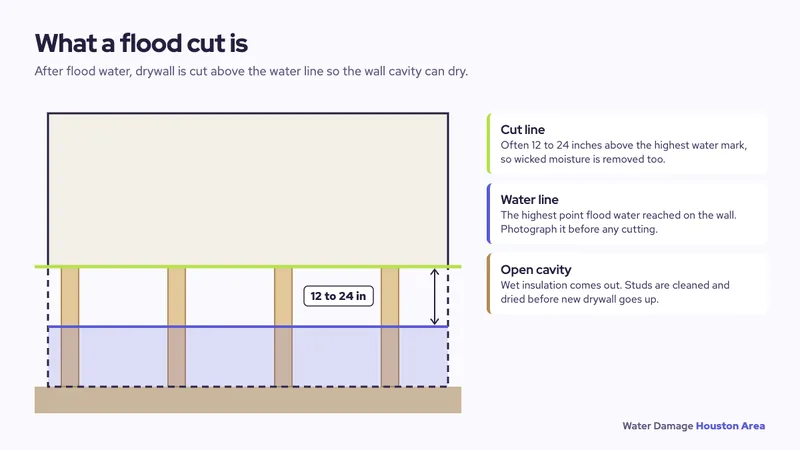
Before anyone cuts, photograph the water line, since an adjuster may ask to see it. After that the wet board and insulation are removed, the framing is cleaned and dried, and replacement drywall goes up only once readings confirm the wood is dry. Flood cleanup lays out the full sequence.
How do I find water damage behind drywall?
Look and sniff first, then verify with a moisture meter. Water inside a wall tends to announce itself through a stain, a soft patch or an odor well before a puddle or a wet carpet edge appears. Waiting for visible pooling usually means the leak has been running for a while.
- Stains or bubbling paint that spread or reappear after the wall dried.
- Spots that feel soft or cool under your hand.
- Swollen baseboards or trim lifting away.
- A stale smell along one wall, cabinet run or corner.
- Higher water bills with no leak you can see.
A moisture meter, pin or pinless, can read a wall without making any holes. Walk through each room with the signs of water damage guide, and see moisture meter readings for what the numbers mean. Plumbing often serves two rooms, so check the far side of the wall as well.
What should I do first when a wall gets wet?
Begin by stopping the source of the water, then start moving air across the wall. These six steps hold the damage in check while you arrange help and wait for a provider's moisture reading, and they cost almost nothing.
- Close the water valve for a leaking pipe or fixture. The burst pipe page shows where the shutoffs sit.
- Cut the circuit serving the wet area, but only when the panel can be reached without wading through water.
- Photograph the wall and outline the edge of the stain in pencil to watch whether it spreads.
- Move furniture a little away from the wall so air can circulate across the surface.
- Run fans and a dehumidifier. The EPA's target is indoor humidity under 60 percent, ideally 30 to 50 percent.
- Request a provider's moisture reading before the wall is closed up or painted.
Can I paint over water damage?
Not yet. Painting a wet or moldy wall buries the problem and seals moisture inside the wall. EPA guidance rules out painting or caulking moldy surfaces, so repair and drying have to come before any finish, however minor the stain looks and however soon you want it covered.
Order matters: fix the leak, dry the wall all the way, then clean or replace whatever is damaged.
Stains frequently show through regular paint. A primer that blocks stains only improves appearance, and only on a dry wall where nothing is still leaking. It does not fix anything.
A stain that comes back means the wall is still getting wet. Fresh joint compound over wet board fails for the same reason.
What about wet insulation in the wall?
Soaked insulation keeps water pressed against the studs and dries slowly, which is why it is often pulled out. Fiberglass batts can slump and retain moisture at the base of the cavity, so the framing can stay wet long after the wall face feels dry.
Find out from the provider if the insulation is going to be removed or left to dry, and why. Pulled insulation is replaced once the cavity reads dry. Claims often list insulation apart from drywall, so keep the invoice and the photos.
Attic and ceiling insulation is a related case. A roof or air handler leak can soak it above a ceiling that still looks fine, which the ceiling repair page covers.
What about swollen baseboards and trim?
A swollen baseboard tells you the water got to the base of the wall. Real wood trim can sometimes be saved by drying it, while particleboard and MDF trim puffs up and seldom returns to its original shape, so replacement is likely either way.
Trim usually comes off first anyway, replaced or not, so the wall behind gets airflow. If you plan to reuse pieces, label them as they come off. When baseboards swell along a wall and no leak is obvious, the cause may sit inside the wall, and sudden versus gradual leaks explains how to tell them apart.
Does insurance cover drywall water damage in Houston?
Often when the water came from plumbing, but not when it came from outside. NAIC says water damage from a home's plumbing or a roof leak is typically covered, while ground water and rain runoff are not. FEMA says most homeowners insurance does not cover flooding.
That split matters after a storm. Triple-I says flood damage is excluded under standard homeowners policies and needs separate flood coverage. It also says policies will not cover damage from lack of maintenance or from mold.
Triple-I advises protecting the property from further damage, photographing everything and holding off on major permanent repairs until the adjuster visits. The insurance claims guide covers deadlines the Texas Department of Insurance describes.
How much does drywall water damage repair cost?
Nationally, drywall repair runs $1.50 to $3 per square foot, a range both Fixr and Bob Vila publish. That covers the repair work only, not extraction, drying or paint. For plaster, Fixr lists $6.25 to $18.75 per square foot.
Those figures are national, so a Houston quote can differ. No provider can price a wall without measuring and testing it, and providers set their own rates, so confirm directly. Water damage restoration cost gives the wider picture.
Sources: EPA, A Brief Guide to Mold, Moisture and Your Home; EPA, Mold Cleanup in Your Home; IICRC S500; NHC, Hurricane Harvey Tropical Cyclone Report; CDC, About Mold and Your Health; NAIC, Homeowners Insurance; FEMA, Don't have flood insurance; Triple-I, Which disasters are covered by homeowners insurance?; Triple-I, Settling insurance claims after a disaster; Texas Department of Insurance, Getting your insurance claim paid; Fixr, Water Damage Restoration Cost; Bob Vila, How Much Does Water Damage Restoration Cost?