The short version
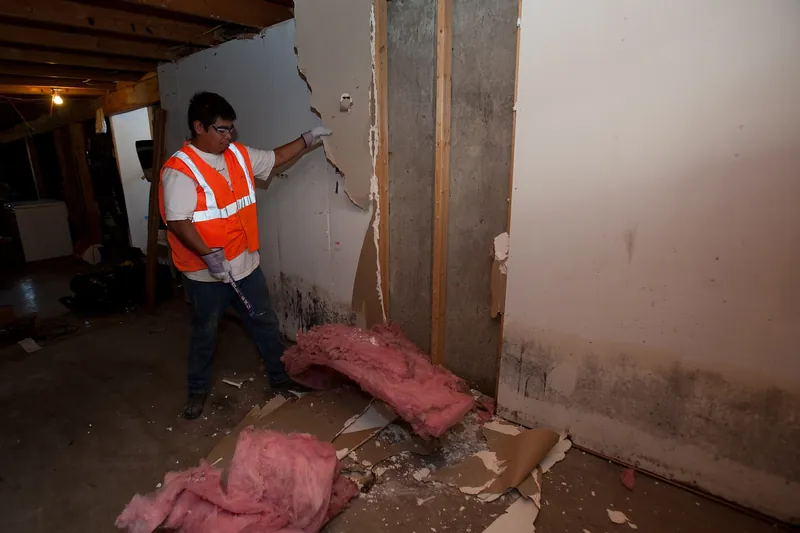
Water damage repair puts back what mitigation took out: insulation, drywall, flooring, trim and paint. Work starts after moisture readings show a dry structure; the EPA advises drying in the first 24 to 48 hours to prevent mold. Not every provider rebuilds, so ask, and insist on a line-item estimate.
What is water damage repair, and how is it different from mitigation?
Water damage repair is the construction stage that follows drying. Insulation and drywall get replaced, then trim, flooring, cabinets and paint go back. Mitigation comes first to contain the loss, and repair then restores the finished surfaces. Around Houston, the two phases are often billed, scheduled and even carried out by different companies.
Nothing here is a contracting business: this site refers property owners to independent restoration providers. Some of those providers only dry the structure, some also rebuild, and some pass that work along to a general contractor. Providers differ, so put the question to each one: what is included, and what is not?
For the first phase, see water mitigation and structural drying. This page picks up after them.
Is it called restoration, repair or reconstruction?
The words overlap, and companies use them loosely. The label matters less than the scope on paper, so read the line items before you sign. The table below shows how the two phases usually split between mitigation and the rebuild that comes after it.
| Mitigation | Repair or reconstruction | |
|---|---|---|
| Main question | Has the water been dealt with, and is the space safe? | Is the finished space back to how it looked and worked? |
| Usual work | Extraction, removal of wet materials, drying equipment, moisture readings | Insulation, drywall, texture, paint, trim, flooring, cabinets |
| Begins | When the leak is stopped and the space is safe to enter | When moisture readings show the materials are dry |
| Who handles it | A restoration provider | That provider's rebuild team, or a contractor of your choosing |
| Records | Drying log, days of equipment on site, photographs | Written scope, itemized estimate, materials list |
Unfamiliar words on an estimate or work authorization are explained in the water damage glossary.
Why does repair have to wait until the structure is dry?
A wall closed while wet holds the moisture in, and that moisture is what mold and rot feed on. The EPA advises getting water-damaged areas and items dry in the first 24 to 48 hours to prevent mold growth, so the rebuild should wait for readings that confirm drying, not a hunch.
The proof is a set of readings. A meter checks framing, subfloor and drywall at the same marked spots on each visit, and a dry log records the numbers. If a contractor wants to close walls and cannot show the log, ask why.
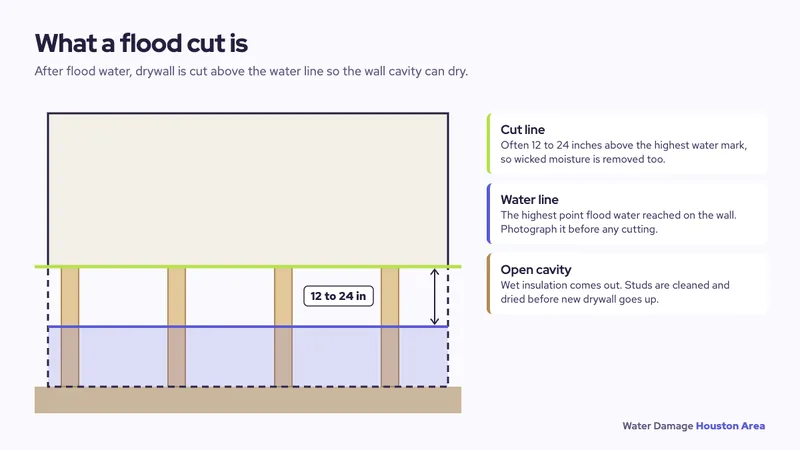
The EPA also advises against painting or caulking moldy surfaces. Should a wall that was meant to be dry show stains or smell musty, mold after water damage is worth reading before any paint goes on.
What gets rebuilt after water damage, and in what order?
Whatever mitigation removed has to go back, and the order matters because each trade works over the one before. The usual sequence runs from fixing the cause of the leak to the final walk-through, and it starts only after drying is confirmed.
- Confirm dry readings and fix the cause. A plumber, roofer or HVAC technician repairs the source first.
- Replace insulation where it was removed. Wet batts are usually discarded, not reused.
- Drywall goes up, gets taped and is finished. Drywall water damage repair explains how to decide between drying a wall and replacing it.
- Primer, texture and paint. Patching a painted wall generally means repainting the full wall so the finish looks even.
- Trim and baseboard go back on.
- Flooring is laid from the bottom up: subfloor, underlayment, then the surface you see. The water damaged floor page covers whether to dry or replace.
- Cabinets, fixtures and appliances are reinstalled, followed by a walk-through of the job with the contractor.
Carpet has its own decision tree on wet carpet drying. Ceilings are covered on ceiling water damage repair.

How much does water damage repair cost in Houston?
This site has no Houston price to quote, and every provider or contractor sets its own. For a rough scale, Fixr's national figures put restoration between $1,200 and $5,000, averaging $3,000, with the final number depending on the material and the area involved.
The table lists per-square-foot ranges that Fixr publishes for restoring different materials, plus one ceiling range from Bob Vila. Treat them as national figures, not quotes.
| Material | Published national range | Source |
|---|---|---|
| Drywall | $1.50 to $3 per square foot | Fixr |
| Carpeting | $4.75 to $10.50 per square foot | Fixr |
| Plaster | $6.25 to $18.75 per square foot | Fixr |
| Hardwood | $10 to $15 per square foot | Fixr |
| Ceiling repair | $350 to $1,250 | Bob Vila |
Ask for a written, line-item estimate so you can compare bids. The full breakdown, including what drives the total, is on the water damage restoration cost page.
Who does the water damage repair work?
That varies by provider, so ask. A few restoration companies have their own rebuild teams, while others finish the drying and step back. A general contractor, a remodeler or separate trades are other options. Neither route is automatically better, and each has trade-offs.
Using one company for both phases gives you a single contact and a continuous schedule. Hiring separately lets you compare bids and pick a builder you already trust. Questions worth putting to any provider:
- Does your company rebuild, or does it stop after drying?
- When a subcontractor is used, who answers if the work fails?
- Is the rebuild quoted separately from the mitigation?
- Who pulls the permit, if one is needed?
- What does the estimate not cover?
The guide to choosing a restoration company has a longer checklist. Triple-I's advice is to gather written bids from licensed contractors, each itemizing materials and prices line by line.
Do I need a permit for water damage repair in Houston?
It depends on the scope, and the permitting office decides, not the contractor. Cosmetic work like paint usually differs from structural, electrical or plumbing work. Houston, nearby cities and unincorporated Harris County each run their own permitting, so the office for your address is the one to ask.
The City of Houston Permitting Center is the place to start for addresses inside Houston. Ask the contractor in writing who will pull any permit and who pays for it.
Permit questions come up most often when walls are opened and wiring or plumbing is touched, or when rebuilding after a large flood. If your home is in a mapped flood zone, ask the permitting office whether extra rules apply to the repair. See the flood zone map guide for how to look up your address.

Should repairs wait for the insurance claim?
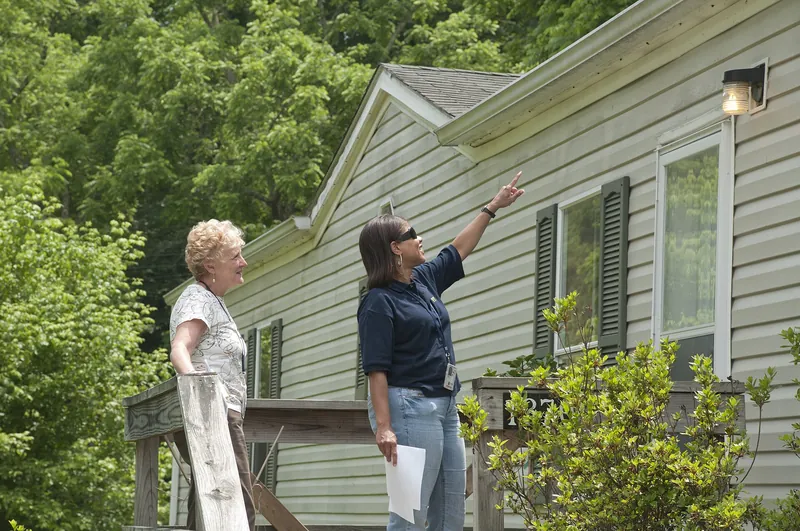
Do the drying now and hold permanent repairs until the claim is clear. Triple-I advises taking reasonable steps to protect the property and holding off on major permanent repairs until the adjuster has assessed the damage. Waiting protects your evidence and your coverage.
Keep damaged materials, or photographs of them, until the adjuster has visited. Save receipts for what you spend. When the scope is settled and readings show the structure is dry, you can book the rebuild.
Coverage depends on the cause. The NAIC says water damage from a home's plumbing or a leak in the roof is typically covered, while damage from ground water or rain runoff is not, and mold is often excluded. FEMA says most homeowners insurance does not cover flooding.
The Texas Department of Insurance explains the steps and deadlines insurers must follow. Read the water damage insurance claims guide for how that fits the repair timeline. Triple-I notes that many policies let you request an independent appraisal if you dispute a decision.
What should I check before signing a repair estimate?
Check that the scope is written line by line, that it names the rooms and materials, and that it says what is not included. A single lump sum hides gaps. Triple-I recommends bids in writing that itemize materials and prices, which makes a fair comparison possible.
Read the estimate against the mitigation paperwork. Anything removed during tear-out should have a matching rebuild line, and nothing should appear twice. The mitigation invoice guide shows how the first phase is billed.
- Scope: rooms, square footage, materials and finish level.
- Exclusions: paint colors, appliance reinstall, permit fees and debris haul-off.
- Change orders: how new findings are priced and approved in writing.
- Payment terms: what is due and when, and what happens if the insurer pays late.
- Warranty: what the contractor stands behind and for how long, in writing.
Providers differ on all of these points, so confirm each one directly before you commit.
Will the new paint and flooring match the old?
Not always, and it is worth raising before work begins. Paint fades, flooring lines are discontinued, and wall texture differs from one hand to the next, so a new patch next to an older wall can be visible even when the work is sound.
Common fixes include painting out to a natural break like a corner, replacing flooring along an unbroken run, and writing down the agreed materials. Whether an insurer covers matching depends on your policy, so check with the insurer instead of assuming.
- Paint: ask for the whole wall or room to be painted, not just a patch.
- Texture: ask for a sample patch before the full wall is finished.
- Flooring: ask what happens if the same product can no longer be bought.
- Cabinets and trim: ask who will match stain and profile, and get that in the estimate.
Why do repairs fail in Houston homes?
Most failures come from repairing before the cause is fixed or before the structure is dry. The cause might be an attic air conditioning drain, a water heater, a supply line or a roof penetration. Fix the source first, or the same stain comes back.
Houston's weather adds pressure. The National Weather Service lists a 1991-2020 normal of 51.84 inches of rain a year at Bush Intercontinental, and Hurricane Harvey in 2017 flooded at least 160,000 structures in Harris and Galveston counties, per the National Hurricane Center. Homes that flooded once often get rebuilt more than once if drying is rushed.
Start with the cause that matches your damage:
- AC leak damage from a clogged drain line or overflow pan.
- Water heater leaks in an attic or garage.
- Roof leaks after a storm.
- Slab leaks under the floor.
While water is still entering the home, begin with emergency water damage restoration. To look for providers that take requests in your ZIP code, browse the service areas or request a connection.
Sources: EPA, A Brief Guide to Mold, Moisture and Your Home; EPA, Mold Cleanup in Your Home; Fixr, Water Damage Restoration Cost; Bob Vila, How Much Does Water Damage Restoration Cost?; Triple-I, Settling insurance claims after a disaster; NAIC, Homeowners Insurance; FEMA, Don't have flood insurance; TDI, Getting your insurance claim paid; NWS Houston/Galveston, IAH normals; NHC, Hurricane Harvey report; City of Houston Permitting Center.