The short version
Moisture meter readings only make sense next to a dry reading of the same material, so there is no one number that means dry. Pin meters probe into the material and pinless meters scan below the surface. Ask a provider for a drying log. The EPA says to dry water damage within 24 to 48 hours.
What do moisture meter readings actually tell you?
A moisture meter readings number tells you how wet a material is compared with a reference, not whether it is safe or ruined. The same number can mean different things in drywall, wood and concrete. A reading only becomes useful when someone compares it with a dry sample of the same material.
This site is a referral service, not a contractor, so it does not take readings or set targets. This guide explains what the numbers mean, what to ask a provider, and why we do not print a single magic number for you to chase.
What is the difference between pin and pinless moisture meters?
A pin meter pushes two small probes into the material and measures the resistance between them. A pinless meter presses a flat sensor against the surface and reads moisture below it without a hole. Both give a relative reading, and each has strengths, so providers often carry both.
| Meter type | How it reads | Good for | Watch for |
|---|---|---|---|
| Pin | Two probes pushed into the material | Wood framing, subfloor, baseboard | Small holes, and readings at one spot only |
| Pinless | Flat sensor scans below the surface | Quick sweeps of drywall, floors and walls | Metal, foil backing or dense material can skew it |
| Hygrometer | Measures humidity in the air, not in a material | Checking room conditions during drying | It says nothing about water inside a wall |
The EPA says relative humidity can be measured with a moisture or humidity meter, a small, inexpensive instrument available at many hardware stores. That is the air-reading kind. It is a useful tool, but it will not tell you what is inside a wall.
What number on a moisture meter means dry?
There is no single number that means dry for every material, so the useful answer is "back to the normal reading for that material in your home." Restoration providers describe this as a dry standard: readings from similar, unaffected material nearby. You compare the wet area with that baseline.
That is why this page gives no table of target percentages. Meters have different scales for different materials, and different models report different units. A figure printed on one meter may not apply to another.
Ask a provider for the unaffected reading and the wet reading side by side, on the same meter, and on the same material. If you only get one number, you cannot judge whether it is dry. Houston's humid air can raise baseline readings in some seasons, which is another reason to compare against a nearby dry sample, not a number from the internet.
Why do drywall, wood and concrete read differently?
Each material holds and releases water in its own way, so the same meter reads them on different scales. Drywall dries relatively fast and can be damaged quickly. Wood can look dry on the surface while the core stays damp. Concrete holds moisture for a long time.
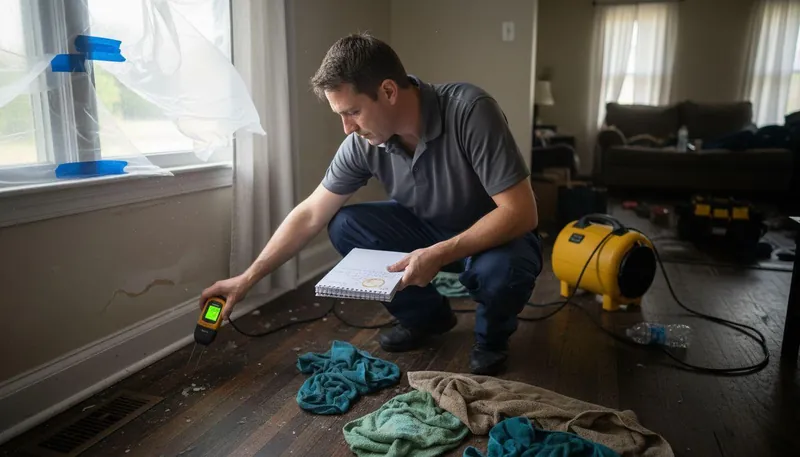
Wood framing and subfloor are the materials most likely to hide a problem. Our water-damaged floor repair guide explains why floors are slow to dry. For walls, see drywall water damage repair.
The EPA says mold may be hidden on the back side of drywall, under carpets and pads, and in similar places. A meter helps find those spots without tearing everything open.
Can a moisture meter read a Houston concrete slab?
A meter can give a rough clue on a slab, but slab readings are the hardest to interpret. If your home sits on a slab, as many Houston-area houses do, you will often be reading a dense material that holds water for a long time and varies from spot to spot.
Surface and pinless readings on concrete may reflect the top layer only. Flooring on top of the slab, such as wood or laminate, may be the better indicator that moisture is moving up. Providers may use different methods for slabs, so ask what they measured and how.
If you suspect water is coming from the slab itself, read slab leak water damage. A slab leak is a plumbing problem, so a plumber may need to find it before any drying can succeed.
What is a drying log and how do I read one?
A drying log is the record a provider keeps of readings, equipment and conditions over the days of a job. It shows whether the structure is getting drier. Ask to see it, because it is the clearest evidence that drying actually happened and when it finished.
A useful log lists the date, the location of each reading, the material, the meter reading and the equipment running. You should see the readings fall over time toward the dry sample. If they stall, something is still wet or equipment is in the wrong place.
- Find the starting readings for each wet area on day one.
- Check that the same spots are measured again on later visits.
- Look for a dry reference from unaffected material of the same type.
- Watch the trend. Readings should move toward the reference, not sit still.
- Confirm the final readings match the dry reference before equipment is removed.
The mitigation invoice guide shows how equipment days on an invoice should line up with the log.
How can I take my own moisture readings at home?
Buy or borrow a meter, read a known dry spot first, then read the suspect area and compare. A home reading is a screening tool, not a final answer. It helps you decide whether to call someone, and it records what you found before the work begins.
- Read a dry wall or floor in a room that never got wet. Write down the number.
- Read the suspect area on the same material with the same meter.
- Check a grid around the stain and mark where readings change.
- Read again after a day at the same marks, with no changes to the room.
- Photograph the meter showing the number and the spot.
Take readings before painting or sealing anything. The EPA says not to paint or caulk moldy surfaces, and paint also hides the clues a meter can find.
What does humidity have to do with the readings?
Humid air slows drying and keeps materials damp. The EPA says to keep indoor humidity below 60 percent, ideally between 30 and 50 percent relative humidity. It also says wet materials dried within 24 to 48 hours will in most cases not grow mold.
Houston's air is warm and often humid, so a house can stay damp after the leak is fixed. The NWS puts the IAH average July high at 94.5 F. The NWS page we checked has no humidity figure, so we do not give one here.
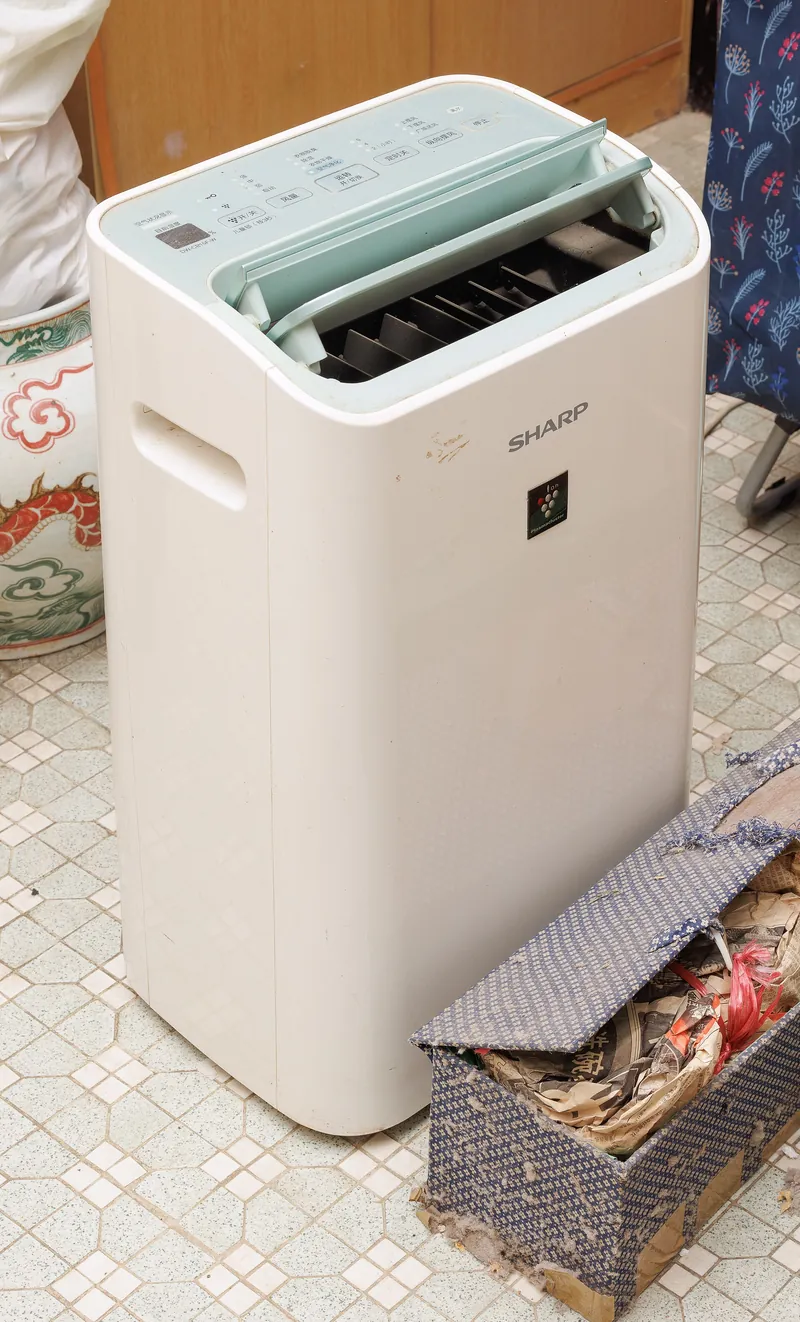

A hygrometer tells you about the air. Material readings tell you about the wall or floor. You need both to know whether a room is truly dry, and our structural drying page explains how providers use them together.
Why can a moisture meter give a false reading?
Several things fool a meter, which is why one reading is never proof. Metal behind drywall, foil-backed insulation, wall coverings, salts in old plaster or concrete, and a meter set for the wrong material can all throw a reading off. Surface condensation can also read as water in the wall.
A few habits reduce the risk. Use the right setting for the material. Read several spots, not one. Compare to a dry sample, and read the same spots later. If a reading seems wrong, check it with a second method such as feeling for cool, damp patches or looking for stains.
The signs of water damage guide lists visible clues to combine with readings. A meter finds moisture. It cannot tell you whether a leak is still active, so watch for new stains after the next rain or after the AC runs.
What should I ask a provider about moisture readings?
Ask what they measured, where, on what material and what they compared it with. A provider who can answer those clearly is more likely to give you a reliable result. Providers differ in equipment and method, so confirm directly rather than assuming.
- Which meters will you use and on which materials?
- What is the dry reference for each material in my home?
- Can I see the readings and photos from each visit?
- What readings will you hit before you remove the equipment?
- What happens if the readings stall?
If you are connected through this site, the provider sets its own terms and methods. See choosing a restoration company for more questions, or browse all of our water damage guides.
When should I call someone instead of reading it myself?
Call when readings stay high after a day or two, when water may be inside walls or under a slab, or when the water was sewage or flood water. Those cases need professional equipment and judgment, and sewage or flood water is a safety matter first.
The EPA says to dry water-damaged areas within 24 to 48 hours, so waiting weeks to start is rarely a good plan. For sewage or other contaminated water, the EPA advises calling a professional experienced with buildings damaged by contaminated water. Read is it safe to stay in a water-damaged house first, and see water mitigation for the provider side.
Sources: EPA, A Brief Guide to Mold, Moisture and Your Home; EPA, Mold Cleanup in Your Home; NWS Houston/Galveston, IAH normals; IICRC S500; CDC, About Mold and Your Health.