The short version
A gradual leak insurance denial usually rests on wear or lack of maintenance wording. Triple-I says policies exclude damage from lack of maintenance and cover accidental discharge from plumbing. Date the leak with photos, a plumber report and moisture readings. A Texas insurer must explain a rejection in writing, and TDI takes complaints.
Why do insurers deny slow leaks?
Insurers deny slow leaks because many homeowners policies are written to cover water damage that is accidental and abrupt, and to exclude damage from wear, neglect or long-term seepage. A gradual leak looks like a maintenance problem to the insurer, so the claim is often denied or only partly paid.
Triple-I says policies will not cover damage due to lack of maintenance, mold or pests, and that maintaining the home is the owner's responsibility. The same source lists accidental discharge or overflow of water from plumbing, heating, air conditioning or a household appliance among the named perils on standard forms. Where one ends and the other begins is the fight. This site is a referral service, not an insurer or law firm, so read this as background, not legal advice. Wording varies by policy, and your policy controls.
What is the difference between a sudden and a gradual leak?
A sudden leak is a break or failure you can point to in time, such as a supply line that bursts or a water heater tank that splits. A gradual leak drips or seeps over weeks or months, such as a pinhole in a pipe, a seeping fitting or a slow roof leak.
The NAIC says water damage from a home's plumbing or a leak in the roof is typically covered, while damage from ground water or rain runoff is not. That is a broad summary, not a policy test. Insurers read the specific words in your policy, and the facts about how long the water had been present. The burst pipe page covers the sudden side, and the signs of water damage guide covers what slow damage looks like.
| Situation | How insurers often read it | What helps your claim |
|---|---|---|
| Supply line bursts overnight | Sudden and accidental | Time you found it, photos, plumber note |
| Frozen pipe splits and thaws | Sudden, if the freeze is the cause | Weather record, repair invoice, photos |
| Pinhole leak in old pipe | Often argued as gradual or wear | Plumber report, pipe photos, moisture readings |
| Slab leak found by a high bill | Often a coverage question; policy wording decides | Leak detection report, bills, repair records |
| Slow roof or flashing leak | May be tied to maintenance or age | Roof inspection, storm date, ceiling photos |
The table shows patterns, not rulings. Two policies can treat the same leak differently, and a denial can be questioned.
Are slab leaks treated as gradual leaks?
Often they get extra scrutiny, because a pipe under a slab leaks out of sight for a while before anyone notices. An insurer may ask how long the leak ran. Whether the damage is covered depends on your policy wording, the cause of the leak and how the claim is documented.
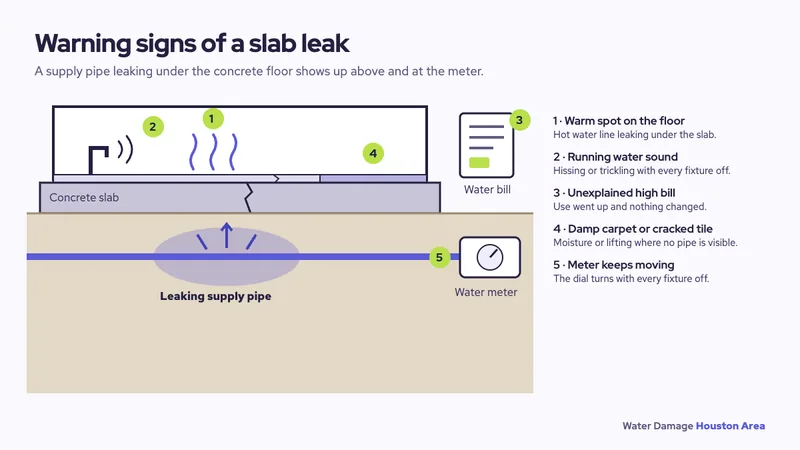
In a house built on a concrete slab, as many Houston-area homes are, slab leaks come up here more than in homes built over crawl spaces. The warning signs are a warm spot on the floor, the sound of running water, a high water bill and damp flooring. The slab leak page explains how they are found. A leak detection report that dates the problem helps, because it gives the insurer something concrete to review.
Ask your insurer in writing how it treats the cost of reaching the pipe and the cost of the resulting water damage. Policies sometimes treat these differently, and the answer is in your policy, not in any general guide.
What does the lack of maintenance exclusion mean?
It means the insurer may refuse damage it says came from neglect, such as a leak you knew about and left alone or a worn part you did not replace. Triple-I says policies will not cover damage due to lack of maintenance, so the insurer will ask what you knew and when.
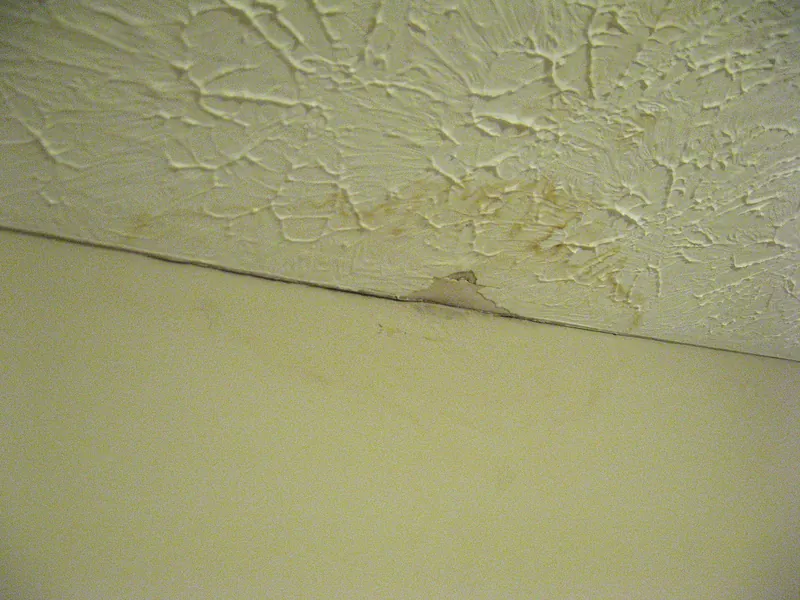
The question usually turns on timing and records. If a ceiling stain was visible for months, an insurer may say the leak should have been repaired sooner. If you found damage the same week it appeared, your records can show that. Keep dated photos, plumber visits and repair receipts. They are the strongest answer to a maintenance argument.
The prevention guide lists routine checks that also work as a paper trail, such as inspecting supply lines, the water heater and the air conditioner drain line. A record that you checked and fixed things shows care. The NAIC says homeowners policies often exclude mold damage, so a slow leak that grew mold can raise two coverage questions at once. The mold guide covers that side.
How common are water damage claims in Texas?
Water damage is one of the most common homeowners losses. Triple-I says about one in 60 insured homes has a property damage claim caused by water damage or freezing each year, and that the average claim for the category was $15,400 across 2019 to 2023. Those are national figures.
The same source says water damage and freezing made up 22.6 percent of homeowners insurance losses in 2023. Houston adds its own causes, including storms, freezes and flooding, which have different coverage rules. Flood is excluded from standard homeowners policies, according to Triple-I and FEMA, so a flood claim is a separate question from a gradual leak.
Texas data from the Texas Department of Insurance shows how claims can end. In its report on Winter Storm Uri, TDI said 36.1 percent of Harris County claims were closed without payment and 61.1 percent closed with payment, as of June 30, 2022. Closed without payment does not mean denied for a gradual leak, since many claims fall under the deductible, but it shows that not every claim is paid.
How do I document a leak so it is not called gradual?
Document the date and condition the moment you notice it, before anything is moved or repaired. Photographs, a plumber's written finding and moisture readings all help show when and how the water appeared. Triple-I advises photographing or videoing the damage and keeping damaged items until the adjuster visits.
- Stop the water. Shut off the main or the fixture valve, then note the time.
- Photograph and video the source, the wet areas and any stains with something for scale.
- Call your insurer right away. Triple-I says to contact your agent or company immediately.
- Get a written plumber report that names the failed part and what it looked like.
- Keep the failed part if you can, until the adjuster has seen it.
- Save bills and receipts, including past water bills that show usage before and after.
- Ask a restoration provider for moisture readings and a drying log.
Protect the property from more damage while you wait, because Triple-I says to take reasonable steps to do so. Keep the receipts for those steps. Hold off on major permanent repairs until the adjuster has assessed the damage. The insurance claims guide goes through the full process.
What if the leak was hidden inside a wall or under the floor?
Hidden leaks are the hardest to date, so documentation matters most. An insurer may argue the water was there for a long time, and you may have no visible stain to counter it. Moisture readings, plumber findings and the pattern of the damage are what you have to show the extent and likely cause.
A moisture meter can show how far the water spread. Bring in a plumber to locate the leak and a restoration provider to measure and dry. The pattern of damage can also give clues, but it is not proof, and an adjuster or plumber may read it differently.
The moisture meter guide explains readings in plain terms. If you cannot find the source, say so in your claim and describe what you did to look. The floor repair page shows what hidden damage under flooring can look like.
What must an insurer tell me if it denies my claim in Texas?
The Texas Department of Insurance says that if a company rejects your claim, it must say why in writing. TDI also lists deadlines for the company to acknowledge the claim, decide on it and pay. This guide describes them in general terms. Read the TDI page for the current wording.
TDI says the company has about 15 days to acknowledge your claim and about 15 days after getting what it needs from you to say whether it will pay. The company can extend that by 45 days if it tells you why it needs more time, and TDI can add 15 days after a weather-related catastrophe. After the company agrees to pay, TDI says it must pay within five business days.
A written denial letter should name the policy provision relied on. Read it closely, and compare it to the wording in your policy. If it says the leak was gradual, the next step is to send your records and ask the company to reconsider.
How do I file a complaint with the Texas Department of Insurance?
You can start on TDI's page called Get help with an insurance complaint, which links to the online complaint form. TDI also lists a general questions line at 800-252-3439. Have your policy, the denial letter, your photos and plumber report, and the dates of each contact ready.
A complaint is a review of how the company handled the claim, it does not promise a different result. Before filing, ask your insurer for a written explanation and send any missing records. Triple-I says to contact the agent or the claim department manager if you disagree, and that many policies allow an independent appraisal, where each side picks an appraiser and they choose an umpire.
Triple-I adds that public adjusters can cost as much as 15 percent of the settlement and should be checked with the BBB and the state insurance department. If the dollars are large, a Texas attorney can explain your rights. For terms you may meet along the way, see the water damage glossary.
Who should I call first after a leak?
Call a plumber to stop and repair the source, your insurer to open the claim, and a restoration provider to dry what got wet. The order depends on the leak, but stop the water first. The EPA says to dry water-damaged areas and items within 24 to 48 hours to prevent mold.
Providers differ, so confirm what each does and what records it keeps. See emergency water damage restoration and the water damage guides.
Sources: Triple-I, Which disasters are covered by homeowners insurance; Triple-I, Settling insurance claims after a disaster; Triple-I, Facts and statistics: Homeowners and renters insurance; NAIC, Homeowners Insurance; FEMA, Dont have flood insurance; TDI, Getting your insurance claim paid; TDI, Get help with an insurance complaint; TDI, Winter Storm Uri losses report; EPA, A Brief Guide to Mold, Moisture and Your Home.