The short version
A home inspection for water damage covers visible stains, soft spots, roof and plumbing leak points, and sometimes meter readings. It cannot see inside walls or under a slab. Read the report next to the seller disclosure, ask what was not reached, and bring in a moisture specialist for any elevated reading.
What does a home inspector check for water damage?
A home inspector looks at what is visible and reachable on the day of the visit: ceilings, walls, floors, the roof, the attic, plumbing fixtures, the water heater and the grading around the house. For home inspection water damage, the job is to spot stains, soft spots and leak points, not to open walls.
Most inspectors work with a flashlight, a ladder and often a moisture meter or thermal camera, though tools vary by inspector. Ask what yours brings. This site is a referral service for water damage restoration, not an inspection company, so treat this guide as a way to read an inspection, not as a substitute for one.
The signs of water damage guide lists what a trained eye picks up first, and you can look for the same things on your own walk-through.
Which water damage clues show up in an inspection report?
Reports use short phrases such as "evidence of previous leak," "staining observed" or "recommend further evaluation." Each one points to a different follow-up. The table matches common wording to what it can mean and what a buyer usually does next. Wording differs from one inspector to another.
| Report wording | What it can mean | Usual next step |
|---|---|---|
| Ceiling stain, dry at time of inspection | A past or occasional leak from the roof, an attic pipe or an AC drain line | Ask the seller about it, then have the source found. See ceiling water damage repair |
| Elevated moisture reading at a wall or floor | Active leak, recent leak or material that has not dried | Request a second reading after a few days and a plumber or drying provider |
| Soft or discolored flooring near a fixture | Leak at a toilet, tub, shower or supply line | Get repair quotes before closing. See bathroom and kitchen water damage |
| Failed or missing flashing | A roof penetration that lets rain in | Roofer evaluation. See roof leak and storm water damage |
| Visible mold or musty odor | Moisture has been present long enough to support growth | Find the water first, then assess the growth |
A dry stain is not proof of a fixed leak. It tells you water was there once, and only a follow-up shows whether it is still there.
Can a home inspector see water damage inside walls?
Not directly. An inspector reads surfaces and can scan with a meter or camera, but a wall cavity, a slab or the space above a finished ceiling stays hidden. Hidden leaks are why a clean report does not rule out water damage, and why some buyers add a specialist visit.
Houston houses mostly sit on concrete slabs, so a pipe leaking under the floor shows up only through indirect signs: a warm spot, a high water bill or damp flooring. The slab leak guide covers those signs. Water from a roof or attic leak can run along framing and show up far from where it entered.
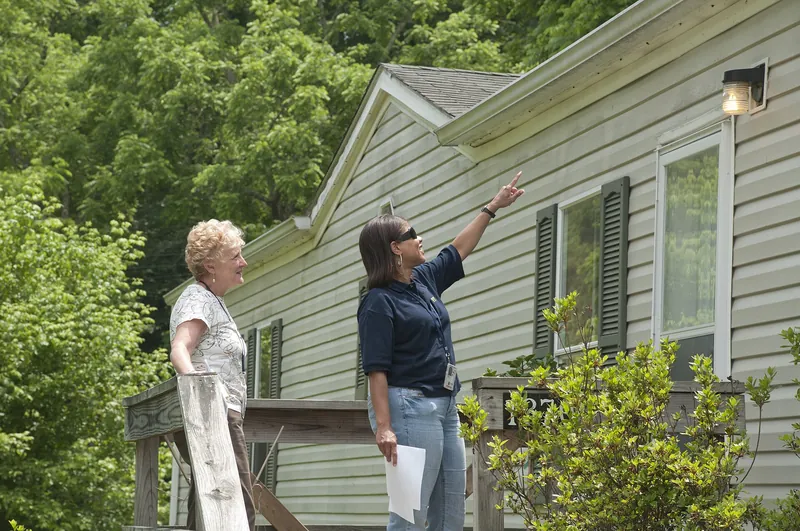

Ask the inspector to state in the report which areas were not accessible. A line such as "attic not entered" tells you where the gap is.
What should I ask my inspector before the inspection?
Ask about scope and tools before you book, not after you read the report. Water questions are easiest to answer when the inspector knows you care about them. Providers and inspectors differ, so confirm each point directly rather than assuming it is included.
- Ask about their license. Request the license number and look it up on the Texas Real Estate Commission website yourself.
- Ask whether a moisture meter or thermal camera is used and whether readings go into the report.
- Ask if the attic will be entered and the roof walked or viewed from a ladder or drone.
- Ask for a sample report so you know how findings are worded.
- Ask about the water heater location, since attic and garage units are common here. See water heater leaks.
- Be present at the end and have the inspector show you each moisture finding.
Take your own photos of anything flagged. They help when you talk with the seller or an insurance agent.
What does the Texas seller's disclosure say about flooding?
Texas sellers fill out a Seller's Disclosure Notice, and a 2019 law, SB 339, added flood questions to it. The text says the law took effect September 1, 2019 and applies to contracts for sale entered into on or after that date. It covers what the seller knows, not what an inspector finds.
Section 6 of the notice asks whether the seller is aware of present flood insurance coverage, previous flooding from a reservoir failure or controlled release, and previous water penetration into a structure from a natural flood event. It also asks whether the property is wholly or partly in a 100-year floodplain, a 500-year floodplain, a floodway, a flood pool or a reservoir.
The older items "Previous Flooding," "Water Damage Not Due to a Flood Event" and "Located in 100-Year Floodplain" also appear in the notice, according to the enrolled bill text. Read the seller's answers next to the inspection report. If they disagree, ask questions in writing. The buying a flooded house guide goes deeper on this.
Does an inspection tell me if the house flooded before?
Only partly. An inspector may notice signs such as water lines, replaced drywall or new flooring in one room, but cannot confirm a flood history from a single visit. The seller disclosure, a floodplain lookup by address and polite questions to neighbors fill in the rest of the picture.
The bill text defines a 100-year floodplain as Zone A, V, A99, AE, AO, AH, VE or AR, and a 500-year floodplain as shaded Zone X. Harris County Flood Control District says its Flood Education Mapping Tool is not the effective FIRM. The effective map is viewed by address on FEMA's Map Service Center. See how to check a flood zone map by address.
FEMA says most homeowners insurance does not cover flood damage. Ask your agent about flood coverage before you close, not after the next storm.
What happens to insurance if the inspection finds water damage?
Known damage can complicate coverage. The NAIC says water damage from plumbing or a roof leak is typically covered, while damage from ground water or rain runoff is not. Triple-I adds that policies do not cover damage from lack of maintenance, mold or pests.
That split matters for a buyer. A leak that has been running for a long time may be treated differently from a sudden break, and the insurance claims guide explains how to document either. Ask your agent what a policy would say about an existing stain before you rely on it.
Photograph findings, keep the inspection report and save any repair quotes in one folder.
When should I bring in a moisture specialist?
Bring one in when the report flags an elevated reading, an unexplained stain, mold, or an area the inspector could not reach. A drying or restoration provider can map moisture and tell you how far it spreads. Providers differ, so confirm what each one does.
The EPA advises drying water-damaged areas and items in the first 24 to 48 hours to prevent mold growth, so a wet house you plan to buy is a reason to move early. The moisture meter readings guide explains what the numbers mean, and structural drying covers what a drying job involves.
If mold is the concern, the mold after water damage guide is the next read. A specialist report can also back up a price negotiation.
How do I use the report to negotiate repairs?
Treat each water finding as a question with three possible answers: fixed, repair needed, or unknown. Ask the seller for receipts on past repairs, get written quotes for the open items, then decide whether to ask for repairs, a credit or a lower price. Contracts differ, so check yours.
Get quotes from more than one source and keep them line by line. Triple-I advises written bids that list materials and prices line by line for insurance work, and the same habit helps in a sale. For cost context, see water damage restoration cost in Houston.
If the seller will not address a wet area, you can walk away within the terms of your contract. Review the options period and deadlines with your agent or attorney, not this site.
All the guides on this site are collected in the Houston water damage guides hub.
Sources: Texas Legislature, SB 339 (86th), enrolled text; HCFCD, Harris County Flood Education Mapping Tool; FEMA, Don't have flood insurance; NAIC, Homeowners Insurance; Triple-I, Which disasters are covered; Triple-I, Settling insurance claims; EPA, A Brief Guide to Mold, Moisture and Your Home.