The short version
A galvanized pipe leak is a pinhole or split in old zinc-coated steel plumbing, often inside a wall. Watch for rusty water, low pressure, stains and a rising bill. Shut off the water, document the damage, call a plumber and ask your insurer whether the leak was sudden or gradual.
Why do galvanized pipes leak in older homes?
Galvanized pipe is steel pipe coated with zinc. Over many years, water wears the coating down and the steel underneath corrodes, mostly from the inside. The pipe then thins in spots and fails as a pinhole leak or a split. A galvanized pipe leak is often small and slow at first.
That slowness is the danger. A pinhole can spray or drip inside a wall, ceiling or floor for a long time before a stain shows. This site is a referral service, not a contractor, so this guide explains what to watch for, what the choices are and what to ask a plumber. Plumbers and restoration providers do different jobs, and you may need both.
Are galvanized pipes common in Houston houses?
Only in older homes, and the oldest Houston housing is inside the loop. Wikipedia says Houston Heights was established as a planned streetcar suburb by 1891, and that buyers have renovated many of its historic homes since the 1990s. Newer houses across the metro area usually have newer plumbing materials, though age alone never settles the question.
A house that old may have had its plumbing replaced, partly replaced or never touched, so you cannot tell from the street. Look at the pipes where they are exposed: at the water heater, under sinks, in a utility room or in the attic. A magnet sticks to steel pipe but not to copper or plastic, and galvanized pipe is gray and threaded at the joints. A licensed plumber or home inspector can identify what you have. The Houston Heights page covers older housing in that area, and the home inspection page explains what an inspector can and cannot see.
What are the signs of failing galvanized pipes?
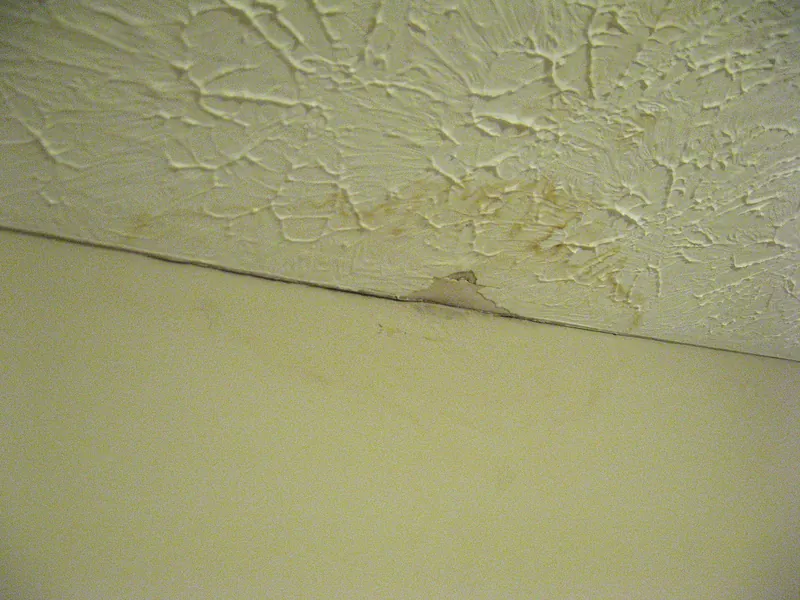
The early signs are small. Look for rusty or brown water when you first open a tap, a drop in water pressure, damp spots on ceilings or walls and a bill that creeps up. Any one of these can have other causes, but a pattern in an older house points at the pipes.
| Sign | What it may mean | First check |
|---|---|---|
| Brown or rusty water from taps | Corrosion inside steel pipe or a rusty water heater | Run the cold tap and see if it clears |
| Weak flow at several fixtures | Mineral and rust buildup narrowing the pipe | Compare pressure at hot and cold taps |
| Stain on a ceiling or wall | A pinhole leak inside the cavity. See ceiling water damage repair | Press on the stain and note whether it grows |
| Higher water bill with no change in use | A hidden leak | Turn off all water and watch the meter |
| Musty smell, no visible source | Wet material inside a wall | See water damage smell |
To test for a hidden leak, make sure nothing in the house is using water, then check whether the meter still moves. The signs of water damage guide lists other clues.
What does a pinhole leak do to walls and floors?
A pinhole leak wets one small area over and over. Drywall and insulation soak up the water, wood framing stays damp and mold can grow inside the cavity. The EPA says mold needs moisture to grow, and it advises drying water-damaged areas within 24 to 48 hours.
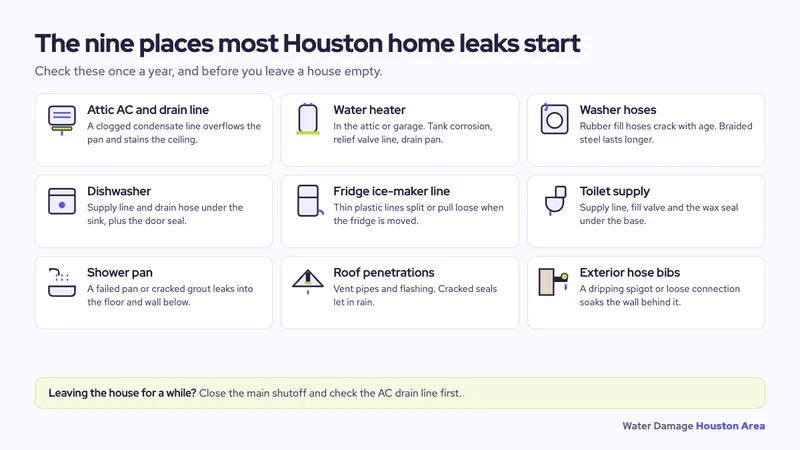
A slow leak rarely has a clear start date, so the 24 to 48 hour window is hard to meet. That matters for insurance as well as repair. If the leak is under a slab rather than in a wall, the problem is different: see the slab leak page. For small leaks that have wet a wall or ceiling, water damage repair describes what tear-out and rebuild can involve.
Is it better to repipe or repair one leak?
A single repair fixes one hole. A repipe replaces the supply lines, usually with copper or PEX. If one section of an old galvanized system has leaked, other sections of the same age are likely in similar shape. That is a reason to get a repipe quote, not proof that you need one.
Plumbers differ on advice, so get a written opinion and ask what they base it on. The table compares the choices in plain terms. It does not give costs because prices vary by house and provider.
| Option | What it is | Consider |
|---|---|---|
| Spot repair | Cut out the leaking section and splice in new pipe | Old pipe nearby may fail next |
| Partial repipe | Replace the worst runs, such as the attic or one bathroom | Mixed metals need proper fittings |
| Whole-house repipe | Replace all supply lines with copper or PEX | Needs access and wall patching |
| Wait and watch | Monitor the meter and pressure | A leak can wet walls unseen |
Before you decide, ask whether the plumber pulls a permit and who patches the walls. Confirm directly, because services vary.
What should I do first if I find a galvanized pipe leak?
Shut off the water first, then protect the room and document the damage before anything is moved. Water that keeps running makes the repair bigger and the insurance claim harder to explain. The steps below follow the order that most homeowners find easiest to manage.
- Shut off the water at the house valve. The burst pipe page shows where shutoffs are in a slab house.
- Turn off power to any room where water is near outlets or light fixtures.
- Photograph and film the leak, the stain and any damage, with the date.
- Call a plumber to find and repair the leak. Ask for a written note of what failed and why.
- Call your insurer and ask how a pipe leak is handled. Triple-I advises taking reasonable steps to protect the property and saving receipts.
- Dry the area. Open the wall or ceiling if needed and get moisture readings. See water removal.
- Keep removed materials until the adjuster has looked, if asked.
Does insurance cover a galvanized pipe leak?
Sometimes. The NAIC says water damage from a home's plumbing is typically covered, and Triple-I lists accidental discharge of water from plumbing as a named peril on standard forms. But Triple-I also says policies will not cover damage from lack of maintenance, and insurers may treat corrosion and long-term seepage that way.
The dividing line is usually whether the leak was sudden or gradual, and whether the wear was ignored. Some policies cover the water damage that results but not the pipe itself. Read your policy and ask your agent in writing. Document dates, readings and the plumber's findings, because a leak that went on for months is harder to claim. The sudden versus gradual leaks page explains this fight in detail.
If you disagree with a decision, the Texas Department of Insurance says the company must explain a rejection in writing, and it has a page for filing a complaint. Many policies also allow an independent appraisal. See water damage insurance claims for the full process.
Does old plumbing affect my drinking water?
It can. The EPA says lead pipes are more likely in older cities and homes built before 1986, and that brass faucets and plumbing with lead solder can also be a source. The EPA page does not discuss galvanized pipe itself, so ask a plumber what your system contains.
If you are worried, call your water utility and ask about testing. Run the tap until it is cold before drinking if the water sat overnight, and do not rely on a filter you have not checked is rated for lead. Brown water is usually rust, not lead, but you cannot tell by looking.
When should I call a restoration provider?
Call after the leak is stopped, or at once if a ceiling is bulging, a floor is soaked or a wall is wet. A plumber stops the water; a restoration provider dries and removes the wet materials. Do both quickly, since mold risk grows with each day.
Providers differ, so confirm directly what each one does, and ask for moisture readings and photos. A provider can measure how far the water has spread, which also supports an insurance claim. For plumbing-related water, see appliance leak water damage and the cost guide, and browse the other Houston water damage guides.
Sources: EPA, Basic Information about Lead in Drinking Water; EPA, Brief Guide to Mold, Moisture and Your Home; NAIC, Homeowners Insurance; Triple-I, Which disasters are covered; Triple-I, Settling claims after a disaster; TDI, Getting your insurance claim paid; Wikipedia, Houston Heights.