The short version
Mobile home water damage often starts at the roof, plumbing or floor and spreads quickly through thin walls and a wood floor deck. Check for soft spots, photograph everything and dry the area in the first 24 to 48 hours, as the EPA advises. Flood and wind are separate insurance questions.
What causes water damage in a mobile home?
Mobile home water damage in Houston comes from the same sources as any house: roof and window leaks, plumbing failures, appliance leaks, storm water and flooding. What differs is how little material sits between the water and the living space, and how a floor can fail once it stays wet.
Federal documents use the term manufactured home. This guide uses mobile home because that is how most people search, and it covers both. The leak sources that matter most here are the roof and its seams, supply and drain lines under the floor, the water heater closet and the washer hookup.
This site is a referral service, not a contractor. The next section explains how the construction affects what to check and what to ask a provider. Details differ by home, age and installer, so use it as a guide rather than a diagnosis.
How is a manufactured home built, and why does that matter for leaks?
FEMA's manufactured home guide, P-85, describes a steel chassis under a wood-framed floor, walls and roof, all built in a factory and set on piers or a foundation. The floor deck is usually wood composite panels or plywood, which is why a wet floor can soften and fail.
| Part of the home | What FEMA P-85 says | Why it matters for water |
|---|---|---|
| Chassis | Steel beams and cross members that carry the home's loads to the foundation | Steel does not rot, but the wood floor above it can |
| Floor deck | Usually wood composite panels or plywood over the floor joists | Prolonged wetting can soften it. See water damaged floor repair |
| Walls | Wood studs, often covered with vinyl, aluminum or wood siding | Wall cavities are thin, so moisture reaches finishes quickly |
| Roof | Prefabricated trusses sheathed with composite panels, underlayment and shingles | Roof leaks reach the ceiling fast. See roof leak and storm water damage |
Insulation and vapor barriers are part of the build as well, according to the guide. Each layer can hold water once it gets in.
How do I check a mobile home floor for water damage?
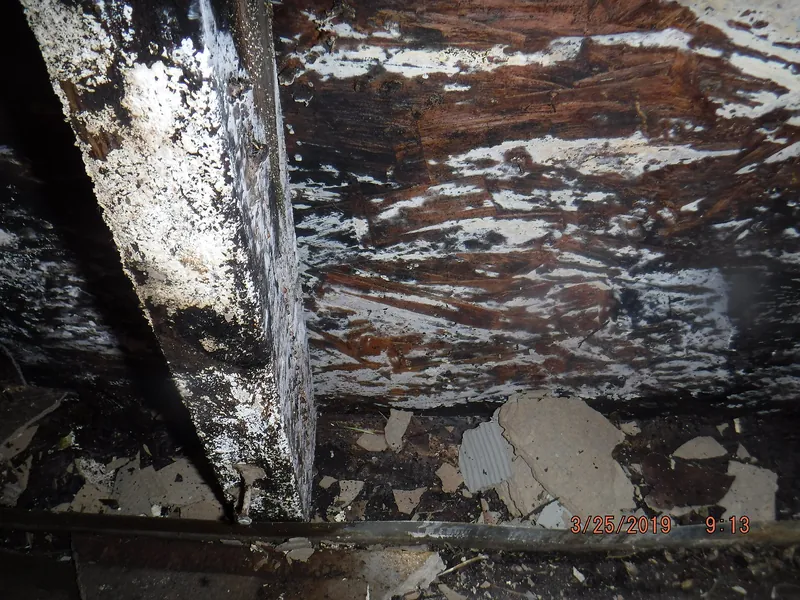
Walk the floor slowly and note any soft, bouncy or sagging spot, especially near the bathroom, kitchen, water heater and washer. A floor that gives underfoot, or a vinyl surface that has bubbled or discolored, can mean the deck below is wet or weakened.

- Press with your foot at the corners of rooms and around fixtures. Mark any spot that gives.
- Look at the flooring surface for stains, lifting seams or a musty smell.
- Check the sink and tub cabinets for dark wood and swelling at the back and bottom.
- Look under the home only if it is dry and safe, using a flashlight, for wet insulation, dripping lines or a torn underside cover.
- Photograph everything before you move or dry anything.
If you cannot reach the underside safely, a provider can inspect it with a meter. Never crawl under a home with standing water near wiring. The moisture meter readings guide explains what the readings show.
Can plumbing under a mobile home leak without me knowing?
Yes. Supply and drain lines often run in the floor system or beneath it, so a drip can wet insulation and the floor deck for weeks before you see a stain. A high water bill, a musty smell or a soft spot near a fixture are the usual clues.
A plumber can find and fix the line, and a drying provider can then address the floor. Both are separate jobs, and providers differ in what they offer, so confirm directly. The signs of water damage guide lists clues you can check yourself.
Houston freezes can split pipes in exposed areas. The Red Cross lists crawl spaces and other unheated areas as the pipes most at risk, so insulate exposed supply lines before a hard freeze. See burst pipe water damage for what to do if one splits.
How does flood water affect a manufactured home?
Flood water from outside, such as rising bayou or street water, is Category 3 under the IICRC S500 standard, which means grossly contaminated. It soaks the floor, wall bottoms and insulation, and soaked porous materials often cannot be dried in place. Flood damage is also a separate insurance question.
FEMA says that where a base flood elevation is mapped, federal rules generally require manufactured homes to be elevated so the lowest floor is at or above that level and anchored to resist flotation, collapse or lateral movement. The guide says most flood damage to pre-1994 homes in Hurricane Georges came from lack of elevation, unreinforced piers, inadequate anchoring and failed attached additions.
That means a home's setup affects how it holds up in water. To see whether an address is mapped, read how to check a flood zone map by address. After a flood, the flood cleanup guide covers safety, and sewage backup cleanup applies if drains backed up.
How do wind and hurricanes cause leaks in a mobile home?
Wind drives rain through roof edges, shingle damage, window frames and siding seams, and trees and debris can open the roof outright. The water then runs into thin ceilings and walls. Even a storm that stays below hurricane strength can do this in an older or poorly maintained home.
The NWS reported gusts of 72 knots at Houston Intercontinental and 73 knots at Hobby during Hurricane Beryl in July 2024, along with widespread tree and power line damage. FEMA's guide notes that HUD adopted tougher wind design rules in 1994 for HUD Wind Zones II and III, after Hurricane Andrew, so a home's age matters.
After a storm, tarp a damaged roof if you can do it safely, photograph the damage and call your insurer. See hurricane water damage in Houston for the full before and after checklist.
Does insurance cover water damage in a mobile home?
It depends on the policy, the cause and the water. The NAIC says water damage from plumbing or a roof leak is typically covered, while damage from ground water or rain runoff is not. FEMA says most homeowners insurance does not cover flood damage.
Triple-I says policies do not cover damage from lack of maintenance, mold or pests, and that flood coverage is a separate policy from the NFIP or a few private insurers. Ask your agent what your policy covers for a manufactured home, as forms differ, and ask about flood cover before the next storm.
Document damage with photos and keep receipts. Triple-I advises protecting the property from further damage but holding off on major permanent repairs until the adjuster has assessed it. The insurance claims guide covers the steps in order.
How fast does a mobile home need to dry out?
The EPA advises drying water-damaged areas and items in the first 24 to 48 hours to prevent mold growth. In a mobile home that matters even more, because the floor deck and thin walls hold moisture against wood, and humid weather slows drying.
The EPA says to keep indoor humidity below 60 percent, ideally between 30 and 50 percent. A provider can set fans and a dehumidifier and track readings. See structural drying for how that works, and mold after water damage if growth has started.
If the floor deck has softened or the insulation underneath is wet, those parts may need to be removed and replaced rather than dried in place.
When should I call a restoration provider?
Call when water has been in the floor, walls or insulation, when you find a soft floor, or when flood or sewage water entered. Early calls help because drying time matters. Providers differ in what they handle for manufactured homes, so ask directly before anyone starts work.
- Ask whether the provider can inspect and dry the area under the floor.
- Ask what readings and photos you will get before and after.
- Ask what is dried and what is removed, and why.
- Ask for the scope in writing and keep it for the insurer.
For costs, see water damage restoration cost in Houston. More guides are in the Houston water damage guides hub.
Sources: FEMA P-85, Protecting Manufactured Homes from Floods and Other Hazards; IICRC S500; FEMA, Don't have flood insurance; NAIC, Homeowners Insurance; Triple-I, Which disasters are covered; Triple-I, Settling insurance claims; EPA, A Brief Guide to Mold, Moisture and Your Home; American Red Cross, Frozen pipes; NWS Houston/Galveston, Hurricane Beryl summary.